
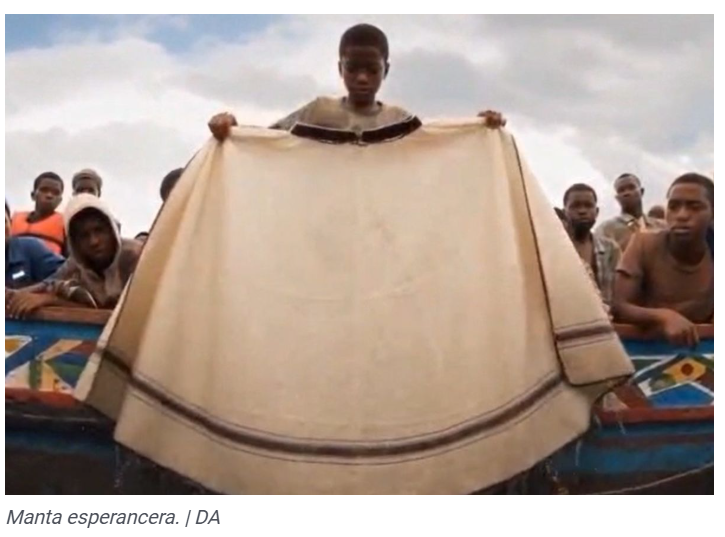
Among the gifts Pope Leo XIV will receive during his visit to Tenerife, few carry as much local significance as the manta esperancera, a traditional garment that has become one of the island’s most recognisable cultural symbols.
More than just a piece of clothing, the blanket represents the history, identity and traditions of La Esperanza, in the municipality of El Rosario, where it has been part of everyday life for generations.
A Symbol Born in Tenerife’s Highlands
The origins of the manta esperancera are closely linked to the rural communities of Tenerife’s midlands and highlands.
For centuries, farmers, shepherds and rural workers relied on the thick woollen blanket to protect themselves from the cold, damp conditions and strong winds that characterise the higher areas of the island.
Traditionally worn folded over the shoulders like a cape, it became an essential part of daily life for those working outdoors in the mountains and forests surrounding La Esperanza.
What began as practical protection against the elements gradually evolved into a powerful symbol of local identity.
From Everyday Garment to Cultural Emblem
Today, the distinctive white blanket with its characteristic stripes is instantly associated with La Esperanza and Tenerife’s rural heritage.
Its cultural importance extends well beyond El Rosario, becoming one of the most recognised traditional garments in Tenerife and the Canary Islands.
Historical references suggest that its development may have been influenced by durable wool blankets imported from England, valued for their ability to withstand moisture and harsh weather conditions. Over time, the garment adapted to local needs and became firmly rooted in the island’s rural culture.
A Gift That Represents More Than Tradition
The decision to present the manta esperancera to Pope Leo XIV carries a deeper meaning than simply offering a traditional object.
The blanket reflects values of protection, hospitality and community, themes that resonate strongly with the message surrounding the Pope’s visit to the Canary Islands.
By selecting this particular gift, Tenerife is sharing a piece of its history and offering a symbol that speaks directly of the people who have shaped the island’s identity through generations of hard work, resilience and connection to the land.
A Symbol of Welcome and Solidarity
A recent video produced to accompany the presentation of the gift places the blanket within a broader narrative of shelter, care and human connection.
Rather than focusing solely on its historical origins, the film presents the manta esperancera as a symbol of welcome and protection, linking its original purpose of shielding people from the cold with contemporary ideas of solidarity and support.
In that sense, the garment becomes more than a cultural artefact. It serves as a reminder of the values that have long defined communities across Tenerife: generosity, resilience and the willingness to offer comfort to those in need.
A Piece of Tenerife’s Identity
As Pope Leo XIV visits Tenerife, the manta esperancera will represent far more than a traditional gift.
It tells the story of La Esperanza, its people and its landscape. It reflects a way of life shaped by the island’s mountains, forests and changing weather. And it carries with it a message that remains as relevant today as when the garment first appeared centuries ago.
A simple blanket once used by farmers and shepherds has become one of Tenerife’s most enduring symbols, and now, a meaningful gift from the island to the Pope.