
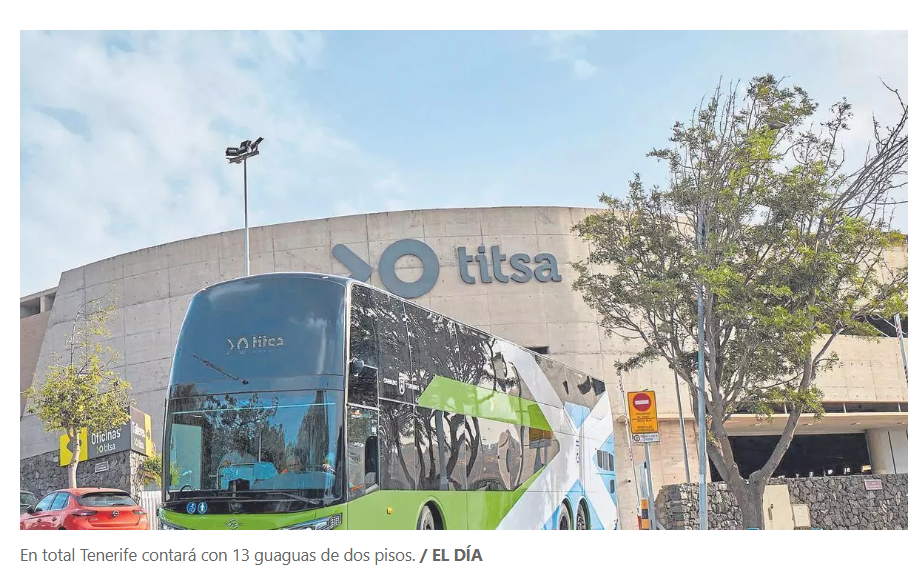
Tenerife has entered a new era in public transport with the arrival of its first-ever double-decker buses, now operating on some of the island’s busiest routes. The new vehicles are designed to increase passenger capacity, improve comfort and help encourage more people to choose public transport over private cars.
The first two buses have already entered service on the 110 route between Santa Cruz and Costa Adeje and the 112 route linking Santa Cruz with Los Cristianos. In the coming weeks, the fleet will expand to 13 double-decker buses, with additional vehicles also operating on the 108 route between Santa Cruz and Icod de los Vinos.
Capacity increases by 44%
Each new double-decker bus increases seating capacity from 59 to 85 passengers, representing a 44% increase per journey.
According to the Tenerife Cabildo, the three routes carried around four million passengers during 2025, with more than 3.7 million of those journeys made by residents.
Once all 13 buses are in service, the routes will be able to accommodate an additional two million passengers each year, increasing annual capacity to approximately six million travellers.
Cabildo President Rosa Dávila described the new buses as “an unprecedented step forward” in improving public transport across the island, adding that encouraging more people to leave their cars at home remains one of Tenerife’s key mobility objectives.
Designed specifically for Tenerife
The buses have been specially adapted for the island’s road network and feature a range of modern safety technologies.
Among the most notable additions is the Alcolock system, which prevents the vehicle from starting unless the driver passes a mandatory breathalyser test before beginning their shift.
Other safety features include:
- Automatic emergency braking.
- Lane departure warning.
- Blind spot monitoring.
- High-definition MirrorCam camera systems replacing traditional side mirrors.
- Seven onboard CCTV cameras covering both decks.
Passengers will also benefit from individual USB charging ports, free Wi-Fi, seat belts and improved accessibility, including electric and manual wheelchair ramps and dedicated seating for passengers with reduced mobility.
Specialist driver training
Because of their size and technology, drivers are required to complete specialist training before operating the new buses.
The programme combines practical and theoretical instruction delivered by TITSA trainers, allowing drivers to familiarise themselves with the buses’ dimensions and advanced onboard systems.
A total of 90 drivers will complete the training programme, with 60 already certified.
Part of a wider fleet renewal
The double-decker buses form part of a major investment programme that has seen 351 new buses added to the TITSA fleet over the past three years through an investment of more than €125 million.
The renewal programme will continue later this year with the arrival of 57 additional buses, followed by 25 more vehicles in 2027, including another five double-deckers.
The investment has reduced the average age of Tenerife’s public bus fleet to around three years, making it one of the newest and most modern fleets in Spain.