
Most people know Tenerife for its beaches, sunshine and Mount Teide.
What many don’t realise is that the island is also home to some remarkable archaeological sites, many of which have never been easily accessible to the public.
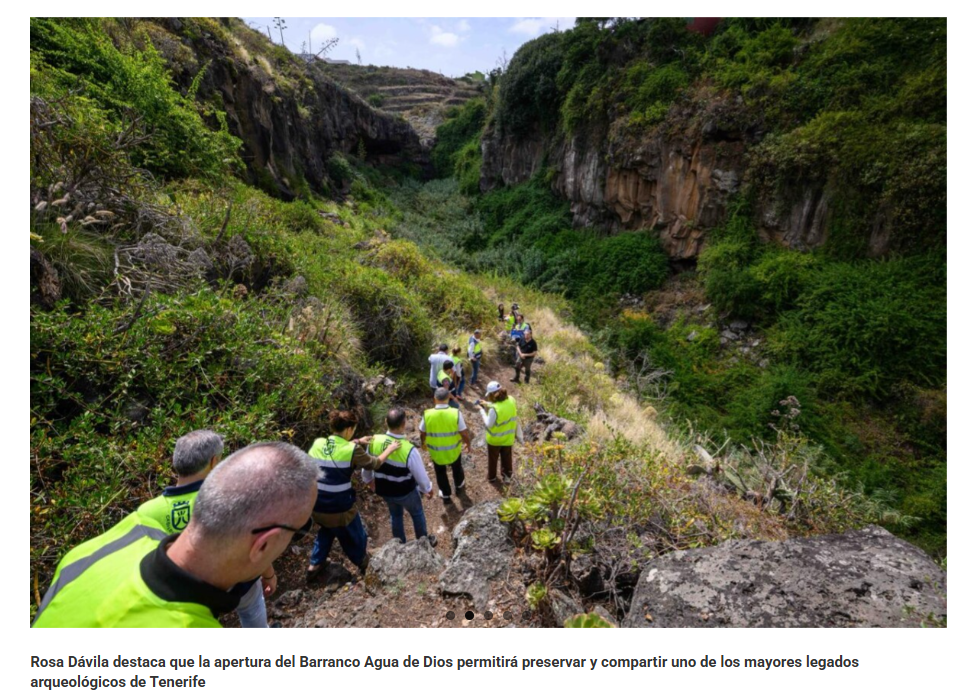
That looks set to change at Barranco Agua de Dios in Tegueste, where plans are moving ahead to gradually open one of Tenerife’s most important Guanche archaeological sites.
A glimpse into Tenerife’s past
The Barranco Agua de Dios was declared a Site of Cultural Interest (BIC) in 2006 and contains almost 100 archaeological sites, including ancient homes, burial caves and other remains dating back to the island’s pre-Hispanic inhabitants.
One of the most significant locations is the Cueva de Los Cabezazos, where archaeologists from the University of La Laguna are continuing their excavations.
Recent discoveries include pottery fragments, animal remains, beads, grinding stones and previously unknown bone tools, all helping researchers build a clearer picture of life in Tenerife before the arrival of the Europeans.
A new visitor centre
As part of the project, a new Interpretation Centre will be created, giving visitors the opportunity to learn about the history of the site before exploring the archaeological area itself.
Plans also include improved walking paths and information points, allowing access while helping to protect this important piece of Tenerife’s history.
The project has a planned investment of €250,000, jointly funded by the Cabildo de Tenerife and the Canary Islands Government.
Preserving an important part of Tenerife
Unlike many historical attractions that have been rebuilt or recreated over the years, Barranco Agua de Dios offers a genuine connection to the island’s earliest inhabitants.
Opening the site in a controlled way should allow more people to discover an important part of Tenerife’s history while ensuring the archaeological remains are protected for future generations.