
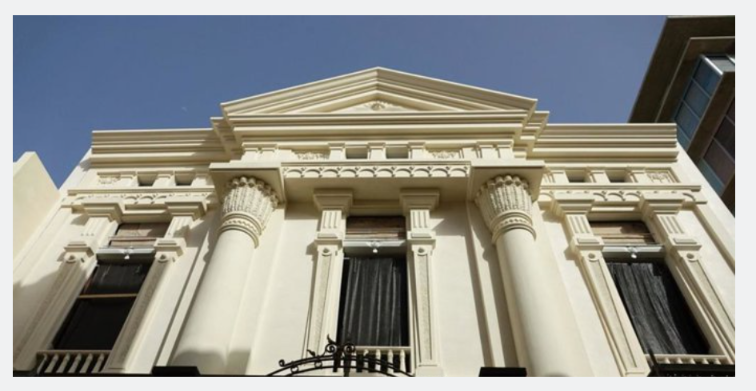
Santa Cruz de Tenerife’s Masonic Temple has been officially recognised as a Place of Democratic Memory, acknowledging its history and the persecution suffered by Freemasons during Franco’s dictatorship.
The designation, published in Spain’s Official State Gazette, recognises the building’s importance as a place connected to the military coup of 1936 and the repression that followed.
The temple has recently undergone a €3 million renovation and is now open to the public. It was already classified as a Cultural Heritage Site in 2007, while the process to give it the new recognition began in April 2024, following a unanimous decision by the Canary Islands’ Historical Memory Technical Commission.
In January 2025, the Spanish Government’s Secretariat of Democratic Memory and Santa Cruz City Council signed an agreement to encourage research and public education about the history of Freemasonry in the Canary Islands and Spain.
A building with a remarkable history
Construction of the temple began in 1899 as the home of the Añaza Masonic Lodge. By 1936, it was regarded as Spain’s largest Masonic centre.
Its striking Egyptian-inspired façade features a range of Masonic symbols, and much of its original decorative work from 1923 has survived despite years of wear and neglect.
The lodge also played a role in education and social progress. In 1909, it established a secular school offering free classes for adults and supported progressive educational initiatives, including a newspaper promoting social advancement.
From community centre to a place of persecution
Following the military coup in 1936, the temple was raided by a paramilitary group. Masonic documents and archives were confiscated and later transferred to Salamanca as part of the campaign against Freemasonry.
Under the control of the Spanish Falange, the building was subsequently used for guided tours that spread false stories about Freemasonry, including claims involving witchcraft and child sacrifice.
From 1939 onwards, it became a centre for interrogations and torture. Human remains discovered at the site in 2009 provided further evidence of its grim past.
The new designation is intended to honour the memory of Freemasons who suffered persecution, alongside other people in the Canary Islands affected by the military coup and Franco’s dictatorship.
It’s a significant recognition for a building that has witnessed both progressive social initiatives and some of the darkest periods in the island’s history. Its story is now an important part of understanding Tenerife’s past.