Adeje is holding its second Disability Conference, Transformando la comunidad (Transforming the Community), on Tuesday 1 December, bringing together professionals, residents and people with lived experience to discuss how the community can become more inclusive.
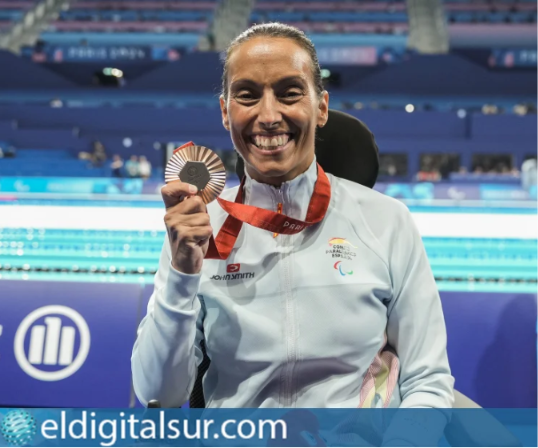
The event, organised by the council’s Community Wellbeing and Social Cohesion Department, will feature two particularly interesting speakers: Paralympic swimmer Teresa Perales and Sara Codina, founder of the online community Mujer y Autista.
Registration is now open through the municipal website at adeje.es.
Raquel Rodríguez Alonso, councillor responsible for Community Wellbeing and Social Cohesion, explained that the aim is not to talk about people with disabilities as though they sit outside society.
“They are already part of our community. That’s why we prefer to talk about community and work together to improve quality of life,” she said.
The conference forms part of Adeje’s first Disability Support Plan, which looks at changes needed both within the wider community and inside the town hall itself. Staff training has already been carried out as part of the work.
A full programme of talks and discussions
The conference begins at 9am with a musical performance from the Adeje Municipal Music School (EMMA), followed by the official opening.
The morning programme includes:
- Occupational therapist Dafne Santana Alemán will discuss sensory regulation in everyday life.
- Special education teacher Sol Solís will focus on the right to communicate and be heard.
- Psychologist and psychomotor specialist Esteban Levin will explore the relationship between the body, identity and movement in disability.
There will also be two round-table discussions. The first, at 12.30pm, will look at how communities can change. The second, at 4.30pm, will ask what residents themselves can do to make that happen.
The afternoon sessions include:
- 3pm: Speech therapist Aída Méndez García looks at differences in autism among girls and women.
- 3.45pm: Sara Codina discusses the causes and consequences of receiving an autism diagnosis late in life.
- 4.30pm: Round-table discussion on what citizens can change as a community.
- 5.30pm to 6.30pm: Teresa Perales closes the conference with her talk, Querer es poder (Where There’s a Will, There’s a Way).
Perales has won 28 Paralympic medals and received the 2021 Princess of Asturias Award for Sports. Alongside her swimming career, she is also a writer and personal and sports coach.
Codina, meanwhile, is an autistic woman who received her diagnosis later in life and founded the Mujer y Autista community.
Proceeds from ticket sales will go to Fundación Canaria ALAS.
Film screening opens the programme on 30 November
The conference will be preceded by a film screening on Monday 30 November at 6pm at the Adeje Auditorium.
The short film has the rather lengthy title Las increíbles pero inciertas aventuras de una persona que se creía normal hasta que cayó por una grieta interdimensional en tierras de Submarnolia.
Created through the PISADA project, it involves the whole team at the Los Olivos Functional Diversity Care Centre.
The story follows a young man who falls through an interdimensional crack and finds himself in Submarnolia, a world where the rules of normality are turned upside down. Suddenly, he is the one who is different, having to deal with diagnoses, paperwork and characters whose logic is absurdly familiar.
Using humour, satire and documentary-style storytelling, the film challenges labels and questions how society looks at disability.
After the screening, there will be a discussion involving people who took part in the film, along with professionals from acting, cinematography and executive production. The conversation will cover humour, representation and the role cinema can play in changing attitudes towards diversity.
International Day of Persons with Disabilities
The programme concludes on Thursday 3 December, International Day of Persons with Disabilities, with the reading of a public manifesto outside Adeje Town Hall.
The event is open to everyone.
It’s a useful reminder that inclusion isn’t something that can be dealt with in a single conference or a policy document. It comes down to how communities work, communicate and make space for everyone in everyday life.