Eloy Santiago used his homily for the Virgen de Candelaria to warn against ideologies that put power and efficiency ahead of human dignity
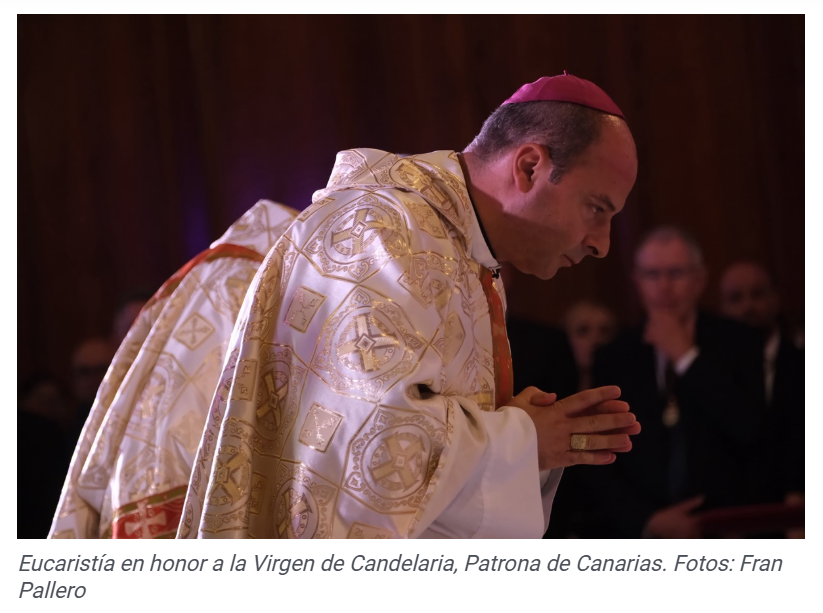
The Bishop of Tenerife, Eloy Santiago, has used his homily during the Eucharist in honour of the Virgin of Candelaria, Patroness of the Canary Islands, to deliver a strong warning about totalitarianism, artificial intelligence and what he described as a “damaging technocratic and post-humanist mindset”.
Santiago criticised what he called “people and totalitarian ideologies that believe themselves to be gods, masters and lords of humanity”, driven by power and wealth without considering the consequences for others.
According to the bishop, these attitudes place people above moral limits, encourage conflict and division and ultimately create a culture where personal benefit comes before the wellbeing of others.
His warning about artificial intelligence
The bishop also linked his concerns to the growing role of artificial intelligence.
He warned of the danger of creating a society where people are no longer valued for who they are, but instead become numbers, data or entries in an algorithm making economic, political or military decisions based primarily on efficiency.
That, he argued, risks losing sight of the human being behind the data.
Santiago also criticised what he described as a “technocratic and post-humanist mindset” in some areas of social and political life.
His concern is that people could increasingly be treated as something to manipulate or optimise, rather than individuals whose freedom and dignity need to be protected.
A message about looking after people
The Bishop also referred to the importance of protecting people in areas including family, work, health, housing and general wellbeing.
He linked his message to Pope Leo XIV’s first encyclical, Magnifica humanitas, and his recent visit to the Canary Islands under the slogan ‘Alza la mirada’, or ‘Raise your gaze’.
The message, Santiago said, should extend beyond people experiencing social exclusion in the Canary Islands.
He also called for solidarity with people in Venezuela and Colombia affected by major earthquakes, urging people not to become indifferent to suffering and instead to offer help and fraternity to those who are struggling.
It was a fairly broad message from the pulpit, but the central point was straightforward.
Technology may become increasingly powerful. Governments and institutions may become increasingly focused on efficiency.
But, according to Santiago, people shouldn’t become just another resource to be managed.