
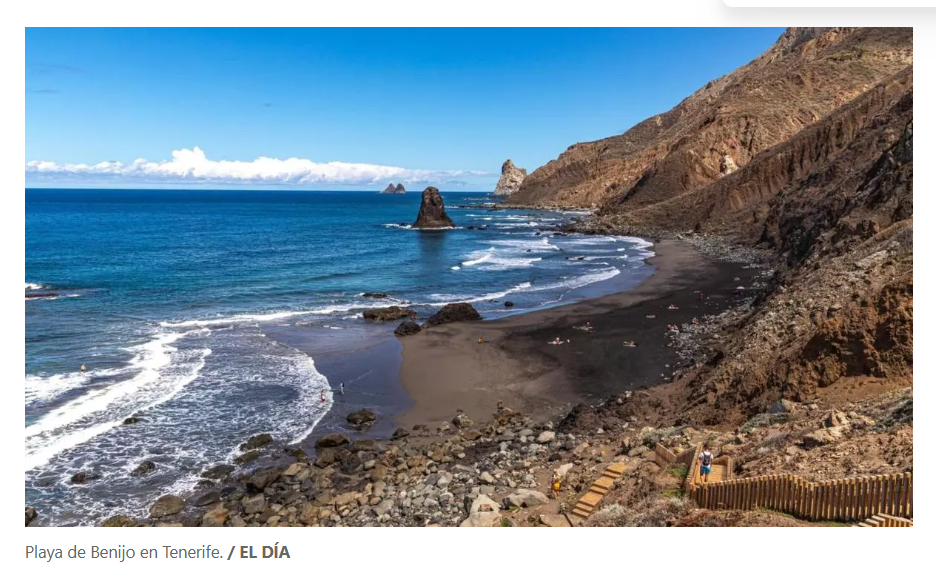
With its black volcanic sand, dramatic cliffs and spectacular sunsets, Benijo Beach has once again been recognised by National Geographic as one of Spain’s most beautiful beaches. However, anyone planning a visit should be aware of one important detail: the beach has been closed to the public since July 2024 due to the risk of rockfalls.
Located in the heart of the Anaga Rural Park, near the village of Taganana, Benijo is widely regarded as one of Tenerife’s most iconic natural landscapes and one of the Canary Islands’ most photographed coastal spots.
A Wild and Untouched Corner of Tenerife
Unlike many of Tenerife’s popular beaches, Benijo offers no sunbeds, beach bars or tourist facilities. Instead, visitors are rewarded with an unspoilt stretch of coastline framed by towering cliffs, volcanic sea stacks and the powerful Atlantic Ocean.
The beach measures around 300 metres long and 30 metres wide, but reaching it requires descending a long flight of steps, helping preserve its peaceful, natural character over the years.
Famous for Its Sunsets
When Benijo eventually reopens, visitors should still take extra care. The beach is known for its strong waves and powerful currents, making swimming dangerous during rough sea conditions.
For many people, however, the real attraction isn’t the water at all.
Benijo has become one of Tenerife’s favourite sunset locations, attracting photographers, hikers and nature lovers eager to watch the evening light transform the volcanic landscape and illuminate the dramatic rock formations rising from the sea.
Other Canary Islands Beaches Featured by National Geographic
National Geographic’s 2026 selection also includes two other outstanding Canary Islands beaches.
Nogales Beach, on La Palma, is another spectacular black-sand beach reached via a steep footpath beneath towering cliffs. Although renowned for its dramatic scenery, its powerful Atlantic waves make it more suitable for experienced surfers than casual swimmers.
Meanwhile, Papagayo Beach in southern Lanzarote offers a completely different landscape. Situated within the protected Los Ajaches Natural Monument, it is famous for its golden sand and calm, crystal-clear waters, making it one of the island’s most popular beaches.
Together, the three beaches showcase the remarkable diversity of the Canary Islands’ coastline, from wild volcanic shores to sheltered golden coves.