
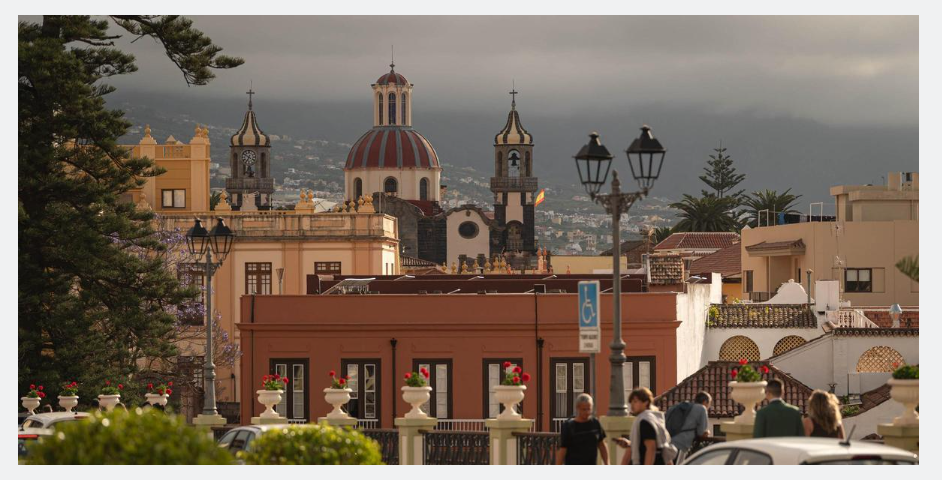
There are plenty of places in Tenerife worth visiting, but La Orotava is one of those towns that rewards you for slowing down.
Forget rushing from one attraction to the next. This is somewhere to wander without much of a plan. Look up occasionally, peer down the side streets and you’ll spot details that many visitors walk straight past.
This year, La Orotava is celebrating 50 years since its historic centre was officially declared a Historic-Artistic Site, a recognition that has helped protect one of the finest collections of traditional architecture in the Canary Islands.
A town shaped by the landscape
One of the things that makes La Orotava different is its layout.
Rather than being built on flat ground, the town follows the natural slope of the valley. Its narrow cobbled streets climb and twist through the hillside, creating viewpoints, hidden courtyards and unexpected corners around almost every bend.
According to the local council, water also played a vital role in the town’s development. Historic channels carried water from Aguamansa to supply homes, mills, gardens and even small electricity generators many years ago. It was this network that helped the town grow into one of Tenerife’s most important settlements.
Two very different neighbourhoods
Historically, La Orotava developed as two distinct areas.
Villa Arriba was traditionally home to artisans and working families, with simpler one-storey houses, while Villa Abajo became the district of wealthy landowners and noble families, where impressive mansions, convents and larger buildings still stand today.
Walking between the two gives you a glimpse into how the town evolved over the centuries.
Look up…the gargoyles are watching
One of La Orotava’s best-known landmarks is the Church of La Concepción.
The building combines Baroque and Neoclassical architecture, but many visitors are drawn to something rather less expected…the stone gargoyles.
Carved from local stone almost 300 years ago, ten of these figures still remain in place today. Originally designed to direct rainwater away from the building, they also add a touch of medieval character that’s difficult to miss once you notice them.
The wooden corners with a purpose
Another feature unique to La Orotava is something called the guardaesquinas.
These wooden corner protectors were fitted to buildings to prevent damage from carts passing through the narrow streets. They’re a reminder of the town’s agricultural past and are one of those small details that make La Orotava feel different from almost anywhere else on the island.
A place that has held onto its history
While some parts of Tenerife have changed dramatically over the decades, La Orotava has managed to preserve much of its historic character.
That doesn’t mean it’s frozen in time. People still live, work and shop here. But the care taken to protect its streets, buildings and public spaces means visitors can still experience a town that looks remarkably similar to the one previous generations knew.
If you’ve only ever driven through La Orotava on the way to Mount Teide, it might be worth parking up next time.
You may find that the real attraction isn’t one particular building at all. It’s the town itself.