
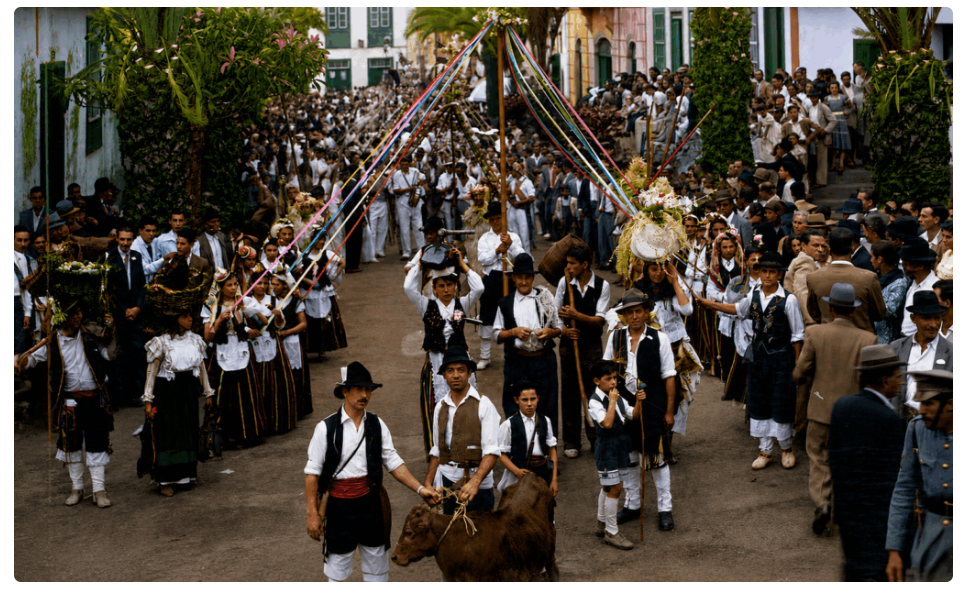
Three historic documents preserved in the Municipal Archive of La Laguna offer a fascinating glimpse into how Tenerife’s public celebrations were organised during the 17th century.
The records, dating from 1635, reveal that the island’s authorities carefully planned and commissioned dance performances for major religious and civic festivities, including celebrations linked to San Cristóbal, the patron saint of La Laguna.
The documents, discovered in a register compiled by notary Agustín de Mesa, include contracts signed on 21 and 23 April 1635. They show that local blacksmith Melchor Luis was commissioned to create three elaborate dance performances for the city’s festivities.
His task was to organise groups of nine, seven and two performers, providing both the dancers and their costumes. In return, he would receive payment of 700 reales, a considerable sum at the time.
The agreement was signed by Pedro Interián de Ayala, the councillor responsible for organising the celebrations. Interestingly, the contract was cancelled just two days later, formally releasing Melchor Luis from his obligations. While the documents do not explain why, they offer a rare insight into the administration and planning behind Tenerife’s traditional celebrations.
Historical records also show that as early as 1580, Tenerife’s governing council had agreed to organise dance performances and bull-related festivities as part of the annual celebrations for San Cristóbal, demonstrating how music, dance and public entertainment have formed part of the island’s cultural identity for centuries.
These centuries-old contracts provide a valuable snapshot of life in La Laguna during the Spanish Golden Age, highlighting not only the importance of public festivities but also the detailed organisation that went into creating them.