
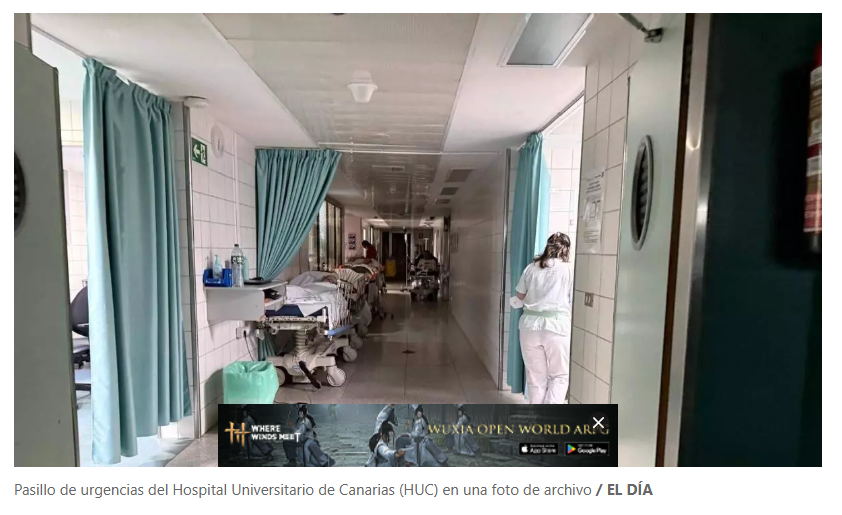
Anyone who’s ever spent hours waiting in A&E will know it isn’t exactly anyone’s idea of a good day out.
The good news is that Tenerife’s University Hospital of the Canary Islands (HUC) is in the middle of a major overhaul aimed at improving emergency care for both patients and staff.
The project forms part of the Canary Islands Government’s Urgencies Project 2024-2026, with more than €2 million being invested across twelve different improvements.
Faster treatment and better facilities
The idea behind the project is fairly simple. Get patients through the system more efficiently after triage, reduce waiting times where possible and create a better working environment for the people providing the care.
Some of the improvements are already in place, while others are still on the drawing board.
Plans include a brand-new paediatric emergency department, dedicated examination rooms to speed up consultations, a larger critical care area, a new trauma unit, an expanded Short Stay Unit and an upgraded resuscitation area.
Improvements already happening
Quite a lot has already changed since the project began.
The hospital has opened a psychiatric emergency unit, created a new admissions and patient support area and added a 22-bed Short Stay Unit.
A further 19 beds have also been introduced for trauma patients.
One of the biggest frustrations for many patients has been waiting to leave hospital after being discharged because transport wasn’t available.
To tackle that, HUC introduced a dedicated discharge transfer unit in early 2025, complete with an extra ambulance and additional staff. The aim is to get patients home much sooner once they’re medically fit to leave.
The hospital has also expanded its home hospitalisation service by 32 beds, alongside additional capacity at the North Hospital and more beds for palliative care.
More staff where they’re needed most
Buildings and equipment only solve part of the problem.
The hospital has also increased its workforce by 22%, adding more nurses and healthcare assistants while reorganising medical shifts to better match the busiest times of the day.
That means more staff available during peak periods and better cover overnight.
Technology helping behind the scenes
Another addition is a real-time digital monitoring system that allows staff to see exactly what’s happening across the emergency department.
If patient numbers suddenly increase, hospital managers can react much more quickly by opening additional treatment areas or bringing in extra ambulance support before the department becomes overwhelmed.
Emergency departments everywhere come under pressure, especially during busy periods, so any investment that helps patients get treated more quickly has to be a positive step. Time will tell how much difference these changes make, but it’s certainly one of the biggest upgrades HUC has seen in recent years.