
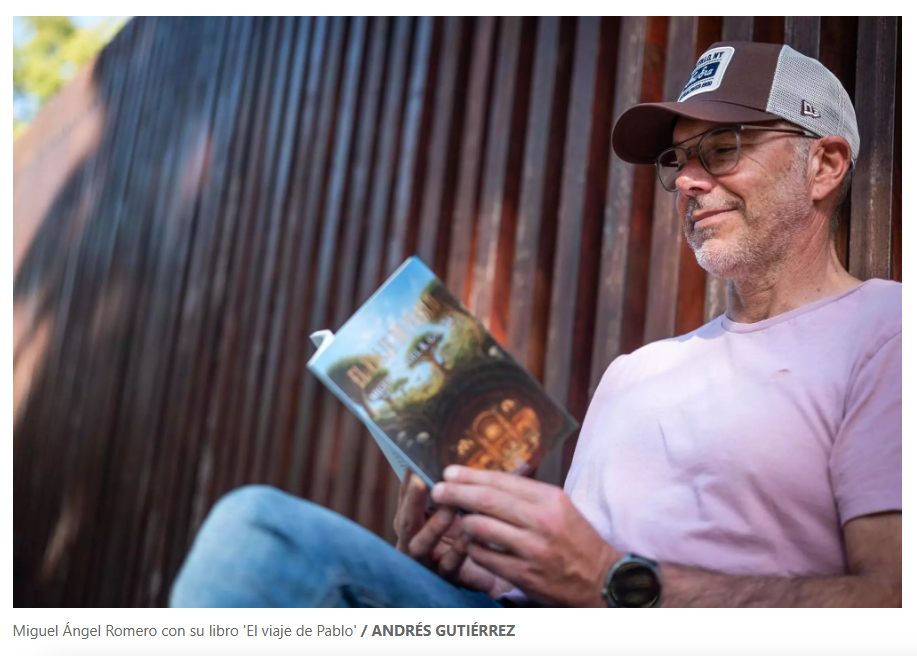
What began as a simple walk with his dogs ended up changing Miguel Ángel Romero’s life forever.
The lawyer, originally from Catalonia but based in Tenerife since his teenage years, suffered a stroke in 2019 following what appeared to be a minor fall. Today, nearly seven years later, he has transformed one of the most difficult experiences of his life into a source of motivation, creativity and recovery through writing.
A Life-Changing Accident
In 2019, Romero was enjoying an active lifestyle. At 49 years old, he exercised regularly, maintained good health and had built a successful legal career.
After spending a morning running with his dogs in Mesa Mota, La Laguna, he slipped and fell. At the time, the incident seemed insignificant.
Fifteen days later, however, he suffered a stroke.
According to Romero, even doctors struggled to identify a clear cause.
He had no history of high cholesterol, hypertension or other common risk factors and was physically fit for his age.
A Long Road to Recovery
When he left hospital in October 2019, he was in a wheelchair.
The recovery process that followed involved:
✔ Physiotherapy
✔ Speech therapy
✔ Occupational therapy
✔ Neurological rehabilitation
Throughout the journey, he faced challenges including reduced mobility, chronic fatigue, sensory loss on one side of his body and difficulties managing emotions.
Despite the obstacles, Romero focused on adapting to his new reality rather than giving up.
Writing as Therapy
One recommendation from his medical team would unexpectedly change the course of his recovery.
To help improve concentration and cognitive function, he was encouraged to start writing.
What began as a therapeutic exercise soon became a new passion.
“It’s a form of therapy and rehabilitation rather than a literary ambition,” he explains.
The process helped him train his attention, focus and mental resilience while giving him a new goal to work towards.
The Journey of Pablo
The result was his first published book, El viaje de Pablo.
The novel contains strong autobiographical elements and follows a young protagonist adapting to major life changes while navigating a futuristic society shaped by technology and artificial intelligence.
Romero’s approach to writing is unique.
Because the stroke affected mobility in his left hand, he cannot type traditionally. Instead, he narrates the story using voice technology, dictating the text to digital assistants that convert his words into written form.
As he jokingly puts it:
“I’m more of a narrator than a writer.”
Raising Awareness of Life After Stroke
Romero also highlights the challenges many stroke survivors face after leaving hospital.
While he was fortunate enough to access additional support through private specialists, he believes important services such as neuropsychology should be more widely available through the public healthcare system.
For many patients, cognitive and emotional rehabilitation can be just as important as physical recovery.
A New Purpose
The stroke ultimately forced Romero into early retirement from the legal profession.
Although he can manage many daily activities, chronic fatigue and emotional regulation difficulties prevent him from returning to work as a lawyer.
Rather than focusing on what he lost, he has concentrated on what he can still achieve.
His second book is already underway and will focus on the history and struggle of Western Sahara, with the aim of helping younger generations learn about the subject.
Inspiring Others Through Experience
Romero hopes his story encourages others facing life-changing health challenges to keep moving forward.
Writing has become far more than a hobby. It has provided purpose, structure and a sense of achievement during a difficult chapter of his life.
His message is simple:
✔ Adapt when life changes
✔ Find new goals
✔ Don’t give up
What started as a rehabilitation exercise has become a powerful reminder that even after the most unexpected setbacks, it is possible to build a meaningful new chapter.