Anyone who has spent a bit of time driving around Tenerife will probably agree on one thing: getting from A to B can sometimes feel like a military operation.
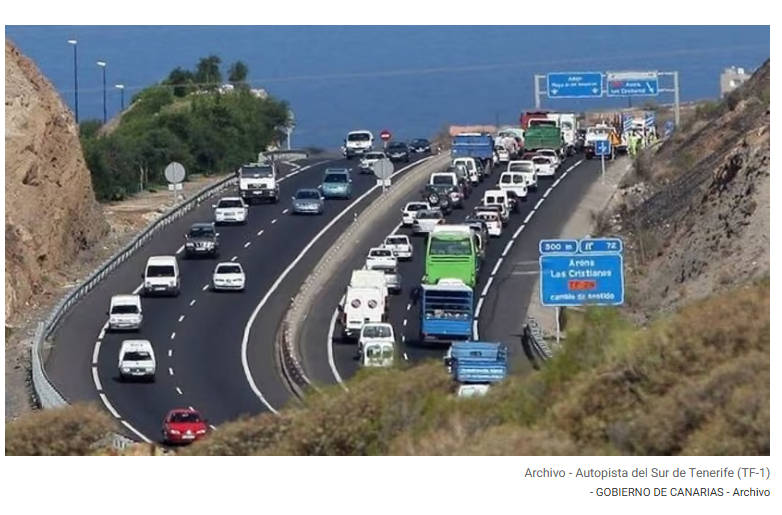
Traffic, bottlenecks, packed buses and the eternal question of whether the TF-1 is moving today or whether you should have packed sandwiches for the journey.
Now, Tenerife’s Sustainable Island Mobility Plan, known as PIMSIT, has taken another step towards becoming reality after receiving approval from the island’s Environmental Evaluation Commission.
The plan includes 91 different initiatives spread across nine programmes, covering everything from public transport and electric vehicles to new road infrastructure.
What could change?
The plan looks at Tenerife’s transport needs over two timeframes: up to 2035 for more immediate challenges and 2045 for the longer-term picture.
Some of the proposals include improving TITSA bus services, extending the tram towards Tenerife North Airport and improving school transport.
There are also plans for more park-and-ride facilities, dedicated bus lanes and better connections between different types of transport.
The idea, at least on paper, is to make it easier for people to leave the car at home. A noble ambition on an island where the car is still king.
More lanes on the motorways
The plan also includes some significant road projects.
A third lane is proposed for sections of the TF-1 between San Isidro and Las Américas, as well as parts of the TF-5 between Tenerife North Airport and La Orotava.
Other measures include car-sharing schemes, low-emission zones, green corridors and an expanded network of electric vehicle charging points.
The environmental assessment says the plan could help reduce CO2 emissions and noise while supporting cleaner transport and protecting Tenerife’s natural environment.
Still one more step to go
The Environmental Evaluation Commission approved the plan unanimously on 11 August, although a few minor adjustments have been made.
It will now go before the Cabildo’s Plenary Commission before heading for final approval by the full council.
Cabildo president Rosa Dávila described the plan as a roadmap for Tenerife’s future, while Mobility Councillor Eulalia García said the focus is on improving public transport and making it easier to move around the island.
Whether all 91 initiatives eventually become reality is another matter. Tenerife has never been short of ambitious transport plans.
But with traffic continuing to be one of the island’s biggest daily headaches, something probably has to give.