Tenerife’s development funding could look rather different over the next decade, with more emphasis on affordable housing and social care and less on the roads and infrastructure projects that have dominated spending in recent years.
The Canary Islands government has approved new rules for the Development Fund of the Canary Islands (FDCAN), setting out priorities through to 2036. The changes were discussed at a recent meeting led by Tenerife Cabildo president Rosa Dávila, attended by representatives from 31 municipalities.
The fund is expected to mobilise around €2.6 billion across the Canary Islands, including approximately €1.6 billion from the regional government. Tenerife hopes to secure around €1 billion through a combination of regional and local funding.
Where has the money gone so far?
The FDCAN was established in 2016 to support economic development, improve public services and create jobs.
An assessment covering 2016 to 2024 found that Tenerife had mobilised €1.139 billion for 2,734 projects. Of that total, €801 million went towards infrastructure, accounting for around 70% of the funding.
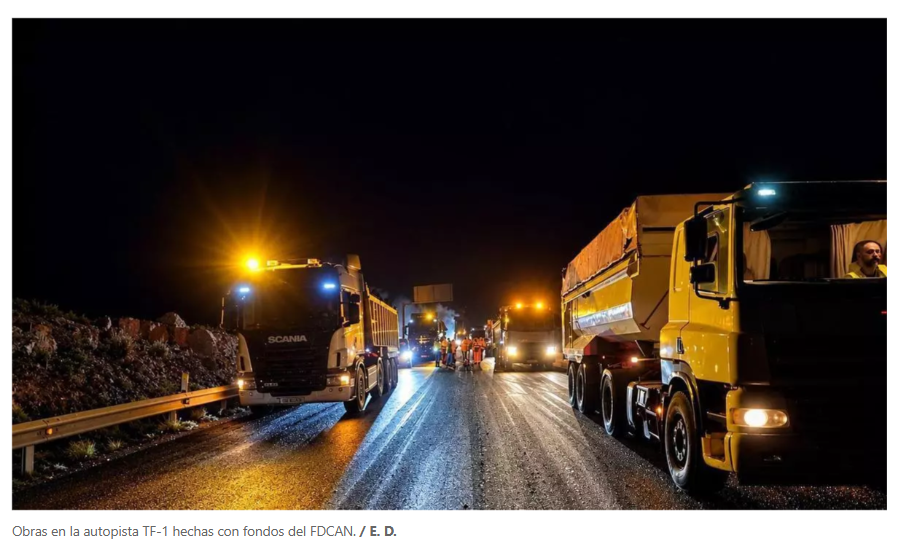
Transport received the largest share, with €429 million spent on improving connectivity across the island. Other projects covered public facilities, water supplies and sewage networks, while planned improvements include major upgrades to the TF-1 motorway and local roads.
There has also been significant investment beyond construction. Around €190 million went towards employment training and support programmes, while €148 million was allocated to innovation and technological development.
A further €707 million supported projects benefiting several municipalities, rather than just one particular area.
What changes under the new rules?
Infrastructure will remain an important part of the fund, but the balance is expected to shift.
Under the new regulations, the proposed allocation is:
- 50% for infrastructure, including housing.
- 35% for social care.
- 15% for research and innovation.
The discussions also highlighted a proposed distribution of island resources, with 30% focused on social care and 15% on innovation, leaving the remaining funding for public works.
The intention is to respond more directly to housing needs, demographic changes and the demand for social services, while continuing to support economic development and improvements to public facilities.
Municipalities must now set out their priorities
Local councils have been asked to submit specific proposals and explain their funding needs for the next three years.
Housing, social care, public facilities and economic diversification are expected to feature prominently as the island decides where the money should go.
The shift marks a change in emphasis for a fund that has spent much of the past decade improving roads and essential infrastructure. The next phase is intended to put more resources towards the homes, services and support that residents need in their daily lives.