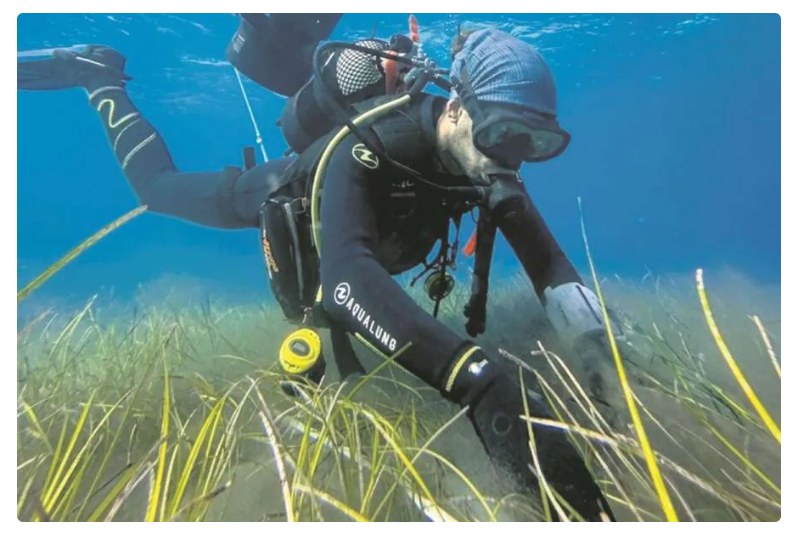
A groundbreaking conservation project in Tenerife has reached a major milestone, with scientists successfully germinating the island’s native seagrass in a laboratory before replanting it back into the sea.
Led by marine conservation organisation Innoceana, in partnership with the Cabildo de Tenerife, the initiative could play a key role in restoring one of the Canary Islands’ most important but threatened marine ecosystems.
Seeds collected for future restoration
The project has completed its first collection of seeds from Cymodocea nodosa, a protected seagrass species that provides essential habitat for marine life.
Collected under authorisation from Spain’s Ministry for Ecological Transition (MITECO), the seeds came from healthy seagrass meadows at El Médano and La Jaquita, where natural seed production is high enough to allow harvesting without damaging existing ecosystems.
Scientists at the University of Las Palmas de Gran Canaria (ULPGC) are now overseeing the germination process. If successful, the first young plants could be ready for pilot restoration projects in the ocean within the next three months.
Eight years of research
The programme builds on eight years of conservation work carried out by Innoceana, combining scientific research, environmental education and collaboration with public authorities.
More than 100 volunteers, alongside marine biologists and conservation experts, have contributed to monitoring and protecting Tenerife’s underwater seagrass meadows.
Why seagrass matters
Although often overlooked, seagrass meadows are among the Canary Islands’ most valuable marine habitats.
They provide nursery grounds for countless marine species, help stabilise sandy seabeds, improve water quality and store significant amounts of carbon, making them an important natural defence against climate change.
Carlos Mallo, CEO of Innoceana, stressed their importance:
“These meadows have protected us for decades without many people realising it. Restoring them is essential, but protecting the healthy meadows we still have is even more important.”
Protection remains essential
Researchers warn that restoration alone will not be enough unless the causes of seagrass decline are addressed.
The biggest threats include boat anchors damaging the seabed, a lack of eco-friendly moorings, coastal development and wastewater pollution.
According to the project team, more than half of the Canary Islands’ seagrass meadows have disappeared in recent decades, making conservation efforts increasingly urgent.
If the laboratory trials prove successful, the restoration method developed in Tenerife could be replicated across the Canary Islands, offering new hope for the recovery of these vital underwater ecosystems.