Around 200 people took part in the 10th edition of La Mudá in Fasnia on Saturday, as the municipality once again celebrated one of its most important rural traditions by recreating the historic seasonal migration of farming families and their livestock from the coast to the highlands.
Organised by the Montañeros de Uzapa group, the event followed a three-kilometre route at almost 1,000 metres above sea level, finishing in the hamlet of Archifira.
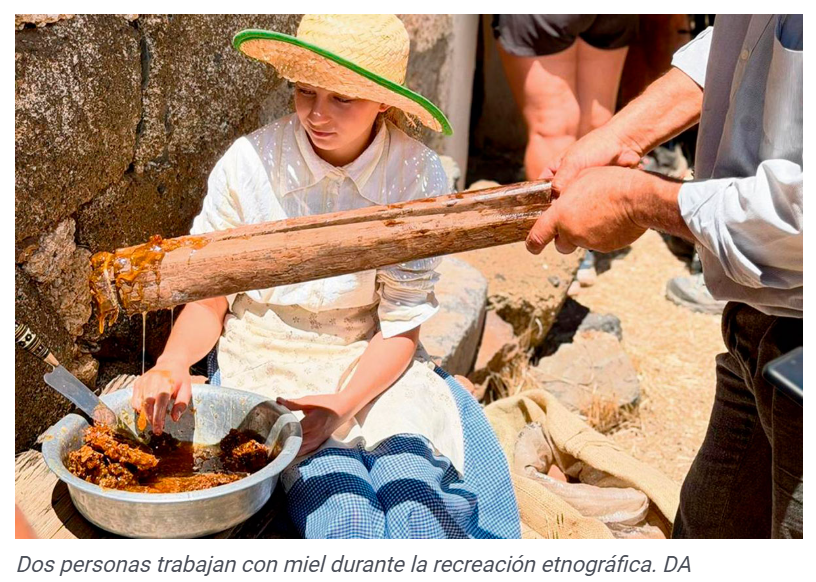
Participants dressed in traditional clothing and carried authentic farming tools, household items and equipment from the period, recreating the journeys made by local families until the mid-20th century. On reaching Archifira, visitors watched demonstrations of daily life as it would have been during the summer months, when families temporarily settled in the highlands to find fresh grazing for their livestock and better farming conditions.
Fasnia Mayor Luis Javier González described the event as a great success, praising both the turnout and the atmospheric weather, with low cloud and mist adding what he called “a special charm” to the experience.
He said events like La Mudá help preserve the municipality’s heritage by allowing new generations to understand how people once lived and worked in southern Tenerife.
The tradition of La Mudá, or seasonal transhumance, saw families move with their animals and belongings from the coast to higher ground every summer. As lifestyles modernised during the second half of the 20th century, the custom gradually disappeared.
The Montañeros de Uzapa association, founded in 2001 by local farmer and rural historian Pablo Lorenzo García Marrero, revived the tradition and has organised the annual re-enactment ever since, with support from Fasnia Town Hall and the Fundación Tenerife Rural.
The group has also helped preserve the municipality’s rural heritage through projects including the publication of the book La Mudá, costumbre de un pueblo and the creation of an interpretation centre at the caves of El Burgado, where shepherds and charcoal burners once lived temporarily.
This year’s event coincided with Al Paso de la Cumbre in Santiago del Teide, another annual cultural re-enactment celebrating the historic barter routes once travelled by rural communities across Tenerife.