
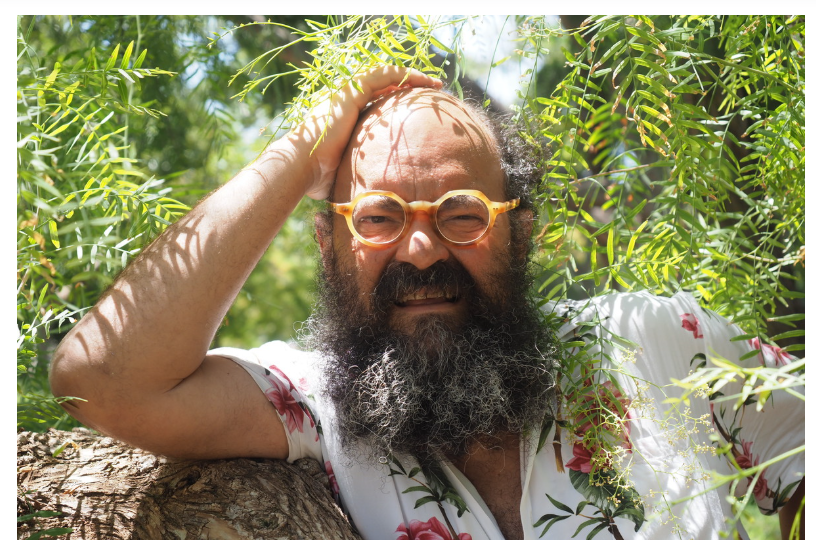
Ignatius Farray has spent more than 20 years on stage, although he admits he has never really understood why he feels compelled to keep doing it.
Born Juan Ignacio Delgado in Granadilla de Abona in 1973, the comedian has built a career around discomfort, chaos and a rather unique ability to make audiences laugh while wondering whether they should be laughing at all.
Now based in Madrid, Farray has appeared in La Vida Moderna, performed to packed theatres and worked on projects such as The End of Comedy, which was nominated for an International Emmy. Despite living away from the islands, his connection with the Canary Islands remains firmly in place.
His latest conversation with Diario de Avisos looks at identity, culture, territory and the strange business of standing in front of a room full of people and deliberately making a fool of yourself.
From Granadilla to the stage
Farray still remembers Agustín Miranda, his Ethics and Music teacher, with particular affection. The two would meet on a bench in La Granja park, where Miranda became something of a mentor and gave him the nickname Ignatius, inspired by the main character in A Confederacy of Dunces.
The surname Farray comes from his father, a rally driver who competed under that name.
So, in a way, the comedian’s career has always been tied to his roots. Even after making his name in Madrid, his work continues to return to questions about the Canary Islands, their identity and what happens when the people who live there become part of the joke.
A need that is difficult to explain
Asked what first encouraged him to step onto a stage, Farray rejects the idea that talent or simply being funny is enough.
For him, it is about necessity.
He compares the experience to the story of Sisyphus, condemned to push a rock up a mountain only to watch it roll back down again. Quoting one of his favourite poets, Juan Gelman, he describes the strange feeling of repeatedly returning to the stage without ever fully understanding what drives him.
“When you go on stage, something similar happens. You never quite understand why you need to do something so absurd. It is a need you cannot explain.”
And that seems to be the point. Twenty years in, Farray is still pushing the rock uphill. Presumably, the rock has developed a decent sense of humour by now.
Two very different versions of Ignatius
There is a noticeable contrast between the character Farray presents on stage and the person people encounter away from the spotlight.
Those close to him describe him as polite, kind and well-mannered. Audiences, on the other hand, may know him as something closer to a thoroughly unpleasant monster.
Farray says he has always been afraid of being misunderstood. Away from the stage, he rarely makes jokes because he worries that people will not understand what he is trying to say.
He describes his politeness as partly a form of protection, a safe place where he does not have to take too many risks.
Comedy gave him somewhere else to go.
On stage, he discovered that making a mistake was not necessarily a problem. In fact, it could be the whole point. The freedom that came with that discovery was enormous, although he admits he may have taken things a little too far.
“Imagine the liberation of finding a place where you could take that risk. It was so liberating that I probably went a bit too far…”
That combination of personal insecurity and complete on-stage recklessness has become a defining part of Farray’s career. Behind the noise, shouting and deliberately uncomfortable humour, there is someone who understands just how risky communication can be.
And perhaps that is why he keeps returning to the stage.