
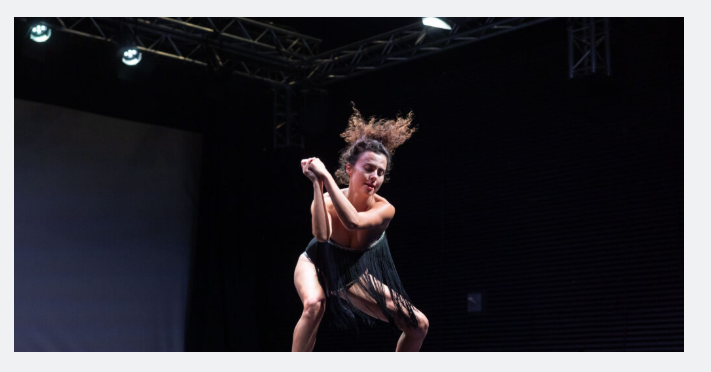
The Teatro Leal in La Laguna will host Anacaona on 15 September at 20:30, a performance created by Acerina Amador and featuring Fernando López.
The production brings together contemporary dance, live music and critical thought to explore colonialism, resistance, memory and the structures of power that continue to shape society.
Anacaona and the legacy of colonialism
The performance takes its inspiration from Anacaona, the Taíno princess who was killed by Spanish conquistadors after refusing to submit to their authority.
Her story provides the starting point for a wider examination of memory, racial identity and the exploitation of women’s bodies, while encouraging audiences to consider how the legacy of colonialism continues to influence the present.
The production is based on the idea that music and dance can become tools of resistance against the psychological terror and shame created by capitalist systems.
Salsa provides an important backdrop as Anacaona looks at capitalism as a modern colonial construct, alongside questions of gender, power and the historical separation between humans and the non-human in processes of racialisation and domination.
Anacaona has also become a symbol within Cuban independence discourse, representing female resistance and a reconnection with the cultural roots of indigenous peoples across the Caribbean and Latin America.
For audiences in Tenerife, the work also opens up a conversation about the colonial history of the Canary Islands and how that history is remembered.
The story continues with Candelaria
The next part of the project is La importancia de llamarse Candelaria, which will be performed at the Auditorio de Tenerife on 20 September.
The production will also travel to Madrid for performances on 2 and 3 October as part of the Surge Festival.
While Anacaona focuses on a historical figure and her resistance, the second work turns its attention to the quieter and more anonymous forms of resistance found in everyday life.
Contemporary dance, live music and critical thought come together around the cultural syncretism surrounding the Virgin of Candelaria, an important figure in Canary Islands identity.
From collective memory to personal experience
Celebrations, pilgrimages and rituals provide the core material for the performance, which explores how memory and collective identity are created and passed from one generation to another.
There is also a personal connection for Amador. Candelaria is the name of her mother, bringing together the wider cultural history of the Canary Islands with her own family experience.
Live music plays a central role, while the body becomes a living archive of memories that don’t necessarily need words to be communicated.
La importancia de llamarse Candelaria is a co-production with the Auditorio de Tenerife, with support from the Tenerife Island Council and the Candelaria Cultural Institute.
A third work is currently being developed to complete the planned triptych, continuing the exploration of forgotten memories, resistance and cultural recovery.