A comprehensive new study has identified 182 ethnographic heritage assets across Geneto and Los Baldíos, significantly expanding knowledge of the area’s rural and cultural landscape.
Commissioned by La Laguna’s Urban Planning Department, the research increases the number of recorded heritage elements by 68%, with the findings set to strengthen the municipality’s Heritage Assets Catalogue as part of the new General Urban Development Plan (PGO).
Major expansion of known heritage
The results were presented at the San Miguel de Geneto Community Centre, where local residents were introduced to the conclusions of a year-long field study examining the historic rural landscape of these traditional agricultural communities.
Councillor for Spatial Planning and Cultural Heritage Adolfo Cordobés said the project revealed that the ethnographic heritage of Geneto and Los Baldíos is far richer than previously recognised.
The study has increased the number of documented heritage assets from 58 recorded in 2017 to 182, many of which had never previously been identified or protected.
Detailed mapping and documentation
The survey was carried out by Trivo, in collaboration with Cultania, using a multidisciplinary team of archaeologists, anthropologists, ethnographers and historians.
Each heritage asset has been fully documented, including:
- Precise UTM coordinates
- Photographic records
- Heritage descriptions
- Current conservation status
- Proposed protection boundaries
Researchers combined historical maps, archival records, aerial photography, on-site inspections and interviews with local residents to build a comprehensive picture of the area’s cultural landscape.
Traditional buildings dominate the inventory
Traditional rural buildings account for the majority of the documented sites, with 112 properties, representing 61.5% of the total inventory.
Other recorded heritage includes:
- Water reservoirs and storage tanks (13.2%)
- Historic residential groups (9.3%)
- Traditional threshing floors (6.6%)
- Religious monuments
- Agricultural terraces
- Artificial caves
- Beehives
- Springs
- Animal drinking troughs
- Traditional ovens
Preservation challenges
The report also highlights growing conservation concerns.
Many of the identified sites are classified as being in fair or poor condition, largely due to the decline of traditional farming, vegetation overgrowth and increasing urban development.
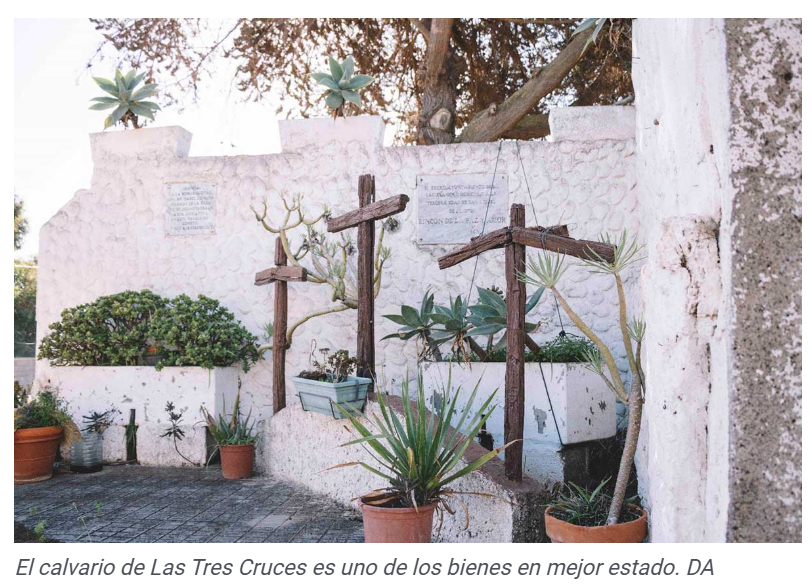
Religious landmarks, including the Calvario de Las Tres Cruces and several chapels, remain among the best-preserved sites thanks to ongoing care from the local community.
The inventory itself does not introduce any new legal protections but will provide the technical foundation for future heritage planning and conservation decisions.