Tenerife has spent decades selling sunshine, beaches, hotels and all-inclusive holidays.
And fair enough. They bring in plenty of people.
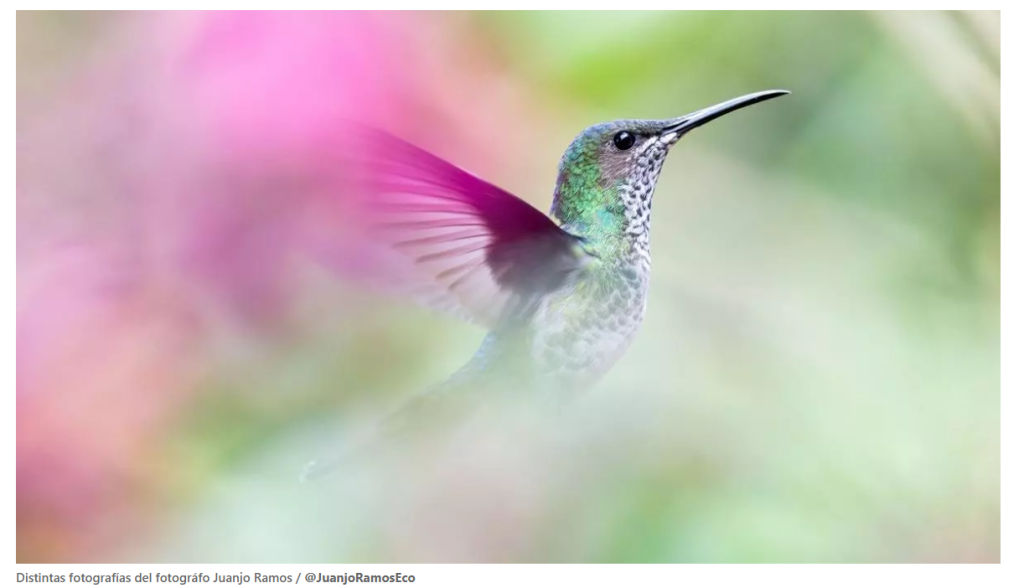
But according to Tenerife naturalist and wildlife photographer Juanjo Ramos, we may be overlooking one of the island’s most valuable assets… its biodiversity.
Ramos, who is from Los Silos and has travelled to nearly 50 countries, believes Tenerife has huge potential for nature tourism and wildlife photography.
The raw material is already here.
We just don’t seem to make enough of it.
Nature as more than a pretty backdrop
Ramos has been interested in nature since childhood, starting out as a birdwatcher before eventually picking up a camera.
These days, photography is about more than getting the perfect shot.
For him, spending time watching birds and wildlife is almost therapeutic. He describes birdwatching as his own form of yoga, which I can understand. Standing quietly in nature waiting for something interesting to happen is probably better for your blood pressure than scrolling through the news.
His photography has also changed over the years.
Rather than simply photographing an animal against a blurred background, he increasingly tries to tell the wider story of where that animal lives. The landscape, habitat and environment are all part of the picture.
Tenerife has plenty to offer
After travelling across Africa, Europe, Asia and beyond, Ramos has seen first-hand how different countries approach conservation and nature tourism.
He points to places such as the United States, South Africa, Chile and Costa Rica, where protected natural spaces attract visitors while also helping support conservation.
And he believes Tenerife could do more.
The island already attracts visitors interested in birdwatching, wildlife and nature photography, and there are agencies catering to that market. But Ramos feels much of Tenerife’s biodiversity remains underused as an economic resource.
In particular, he believes more attention should be given to the island’s thermophilic forests, which support a rich variety of species but have often received less attention than Tenerife’s better-known forests and protected areas.
Not everything is as well protected
Ramos says Tenerife has made progress when it comes to forest conservation.
But coastal and lowland environments are another story.
Arid landscapes and areas closer to the coast can sometimes feel like the forgotten relatives of Tenerife’s environmental heritage. Not as lush, perhaps, but still home to species and ecosystems worth protecting.
And that is part of the problem.
People are generally quite good at appreciating what looks spectacular in a photograph. A misty laurel forest sells itself. A dry, scrubby landscape takes a little more effort.
But both matter.
The photograph isn’t always the important bit
One of Ramos’s most memorable wildlife encounters came in Tibet, where he saw a snow leopard.
Interestingly, he doesn’t remember it as one of his greatest photographs.
The experience itself mattered more.
That probably sums up his approach to photography these days. The numbers, likes and metrics aren’t particularly important to him anymore. The experience of being there is.
As he prepares for a trip to Vietnam, he is particularly interested in photographing birds and primates, including species facing serious conservation challenges.
He is also careful about what he shares publicly, particularly when revealing the location of vulnerable species could put them at risk.
Maybe Tenerife should look a little closer to home
Tenerife’s natural environment is one of the reasons many of us enjoy living here.
The beaches and sunshine are nice, obviously. Nobody is complaining.
But there is far more to the island than that.
From the laurel forests and pine-covered mountains to the dry southern landscapes, cliffs and coastal habitats, Tenerife packs an extraordinary amount into one relatively small island.
Perhaps Ramos has a point.
Instead of always looking for the next thing to build, Tenerife might occasionally benefit from looking more closely at what is already here.
Sometimes the asset is right in front of you.