The Canary Islands Health Service is expanding a system that uses freezing technology to safely store high-risk healthcare waste while reducing environmental impact
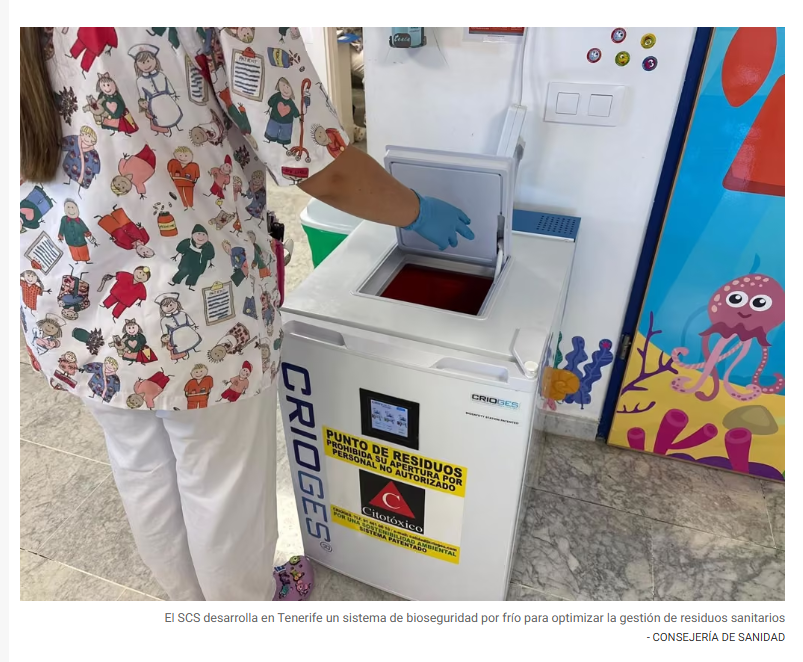
The Canary Islands Health Service (SCS) is expanding an innovative cold biosecurity system at several hospitals in Tenerife to improve the handling of high-risk healthcare waste, including infectious and cytotoxic materials.
The initiative forms part of the Canary Islands Net Zero Emissions Health Strategy 2030, which aims to reduce greenhouse gas emissions across the public healthcare system while improving the way potentially hazardous waste is managed.
Following a successful pilot programme in 2025, the system is now being expanded with 40 new units across the Hospital Universitario Nuestra Señora de Candelaria, Hospital de Ofra and Hospital del Sur.
How the cold biosecurity system works
The system uses specialised containers equipped with freezing technology that keeps healthcare waste at around -12°C.
By maintaining the waste at this temperature, biological activity is significantly reduced during temporary storage, helping to minimise risks for healthcare workers before the material is collected by authorised waste management companies.
The approach is particularly aimed at highly infectious healthcare waste, with the broader objective of allowing this material to be safely treated and subsequently managed as urban solid waste.
The units also incorporate environmental purification technology using titanium dioxide, designed to neutralise potentially harmful emissions and sanitise the air within an area of approximately 25 square metres around each unit.
Less risk and fewer journeys
The SCS says the system offers benefits beyond biosecurity.
Improving the way waste is stored can reduce handling incidents and make the overall management process more efficient. It can also reduce the environmental impact associated with transporting and treating healthcare waste.
That fits directly into the wider objectives of the Net Zero Emissions Health Strategy 2030, which is designed to cut emissions generated by healthcare services across the Canary Islands.
Part of a wider green healthcare strategy
The cold waste system is just one element of a much broader programme.
The Canary Islands Health Service is also looking at the use of green hydrogen for heating and sustainable mobility, the creation of a sustainable mobility hub and a renewable energy generation programme aimed at increasing energy self-sufficiency.
Other planned measures include AI-based systems to monitor and optimise hospital carbon footprints, as well as intelligent controls for lighting and climate systems.
The strategy also includes the conversion of highly infectious waste into urban solid waste as part of efforts to create a more efficient and lower-carbon healthcare model.
For hospitals, dealing with waste safely is obviously non-negotiable. Doing it while reducing emissions and unnecessary transport is the slightly more ambitious bit.