
Spain is getting closer to another change in its vehicle registration sequence, with the familiar number plates beginning with the letter N gradually coming to an end.
According to the Directorate General of Traffic (DGT), the current combinations are expected to run out in the coming months. Once that happens, new registrations will move on to the letter P, with the first combination expected to be PBB.
The change is anticipated by early 2027, although there are still combinations beginning with N to be issued before the new sequence starts.
For drivers in Tenerife, there’s no need to rush off to change anything. This is simply the next stage in Spain’s registration system.
How Spain’s number plate system works
The current format was introduced in September 2000. Spanish registration plates consist of four numbers, from 0000 to 9999, followed by three letters.
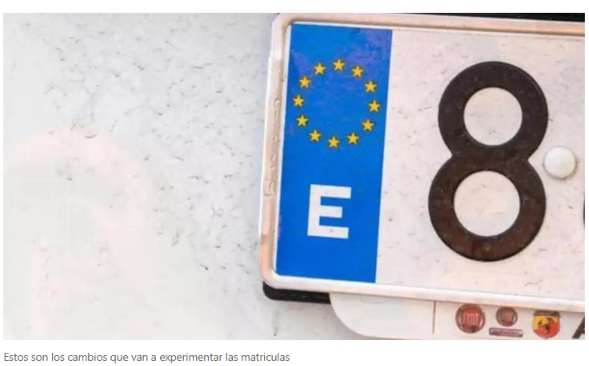
They also feature the blue European Union strip, with the letter E identifying Spain.
Not every letter is used. Vowels are excluded, along with Ñ and Q, to avoid inappropriate combinations and possible confusion.
The sequence also provides a useful way of estimating when a vehicle was first registered. The latest registrations are currently in the NTX series, with NZZ marking the end of the combinations beginning with N.
After that, the system moves on to PBB.
Will existing vehicles need new number plates?
No. The change applies to the sequence issued when vehicles are registered. It does not mean drivers with existing N-series plates need to replace them.
There is also no additional charge simply because the registration sequence changes.
However, registering a new vehicle still involves the usual costs.
For 2026, the DGT registration fee is €99.77 for general vehicles and €27.85 for mopeds.
There may also be registration tax, calculated according to CO₂ emissions, and the annual circulation tax, which varies depending on the vehicle’s fiscal power and the local authority.
Make sure your number plates are readable
While the new letter sequence won’t affect existing vehicles, the DGT does remind motorists that registration plates must be kept in good condition and clearly visible.
Dirty, damaged or obstructed plates can result in a fine of up to €200.
Intentionally altering a number plate or covering letters and numbers to avoid identification is treated much more seriously. Drivers can face fines of up to €6,000 and the loss of six driving licence points.
So, whether your car has an older registration or one of the latest N combinations, the rules remain the same.
The move to P is simply the next chapter in Spain’s number plate system. Your existing registration stays exactly as it is.