
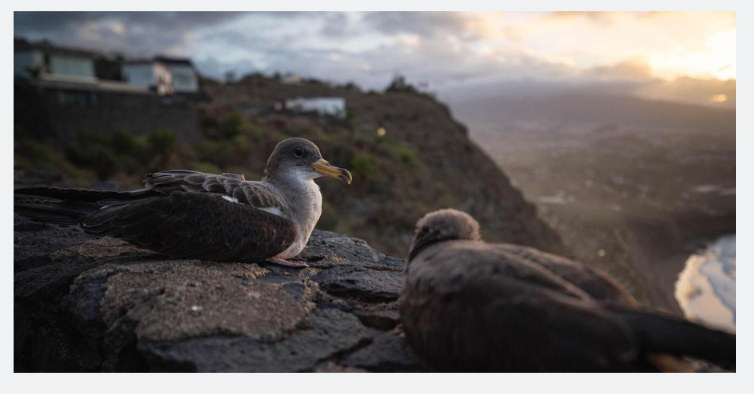
There’s a good reason why Tenerife’s annual shearwater rescue campaign is so important. Every year, thousands of young birds leave their nests for the first time, only to become disorientated by artificial lighting and struggle to find their way out to sea.
The Cabildo has now relaunched its annual rescue operation, which has been running since 1999. The latest release took place at the Santa Ana viewpoint in Santa Úrsula, where 16 shearwaters were returned to the wild after recovering at the La Tahonilla Wildlife Recovery Centre.
This year’s campaign began on 28 October and will continue until the end of November, covering the period when young birds are particularly vulnerable.
1,700 birds rescued so far
Last year, the campaign rescued 2,637 birds, with 2,535 successfully returned to their natural environment. That works out at a recovery rate of 96%, which is a pretty impressive result.
So far this year, 1,700 birds have been rescued and 1,200 released. The figures suggest the campaign could exceed last year’s total before it finishes.
Cabildo president Rosa Dávila said the work was an important part of protecting Tenerife’s natural heritage, recognising the efforts of wildlife professionals, volunteers and local residents.
Natural Environment councillor Blanca Pérez also stressed the importance of acting quickly. Young shearwaters are at a particularly vulnerable stage of their lives, and the sooner a disorientated bird is found, the better its chances of being rescued and returned to the ocean.
Local people play an important part
The campaign also involves educating younger generations about the birds and the problems they face. Among those taking part was 11-year-old Juan Diego Pérez, who joined the activity and learned more about the shearwaters.
Light pollution and the loss of suitable habitat continue to cause problems for these protected seabirds. When young birds become confused by artificial lights, they can end up stranded rather than reaching the sea.
The message is fairly simple. If you find a young shearwater on the ground, don’t try to release it yourself. Get help so it can be checked and safely returned to the wild.