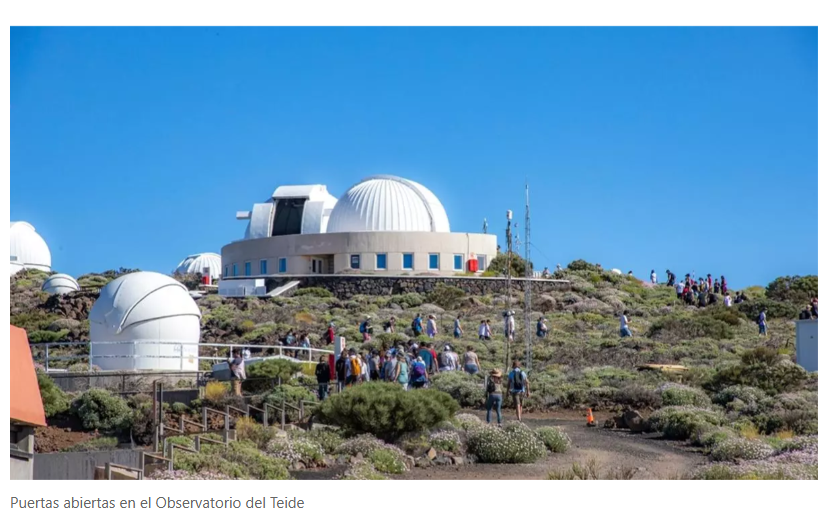
Tenerife’s Teide Observatory has reached another milestone in astronomy.
The fourth telescope in the Two-meter Twin Telescope (TTT) system has officially achieved its first light, capturing an image of the Sombrero Galaxy (M104) and completing what is now described as the largest robotic optical telescope system in the world.
Not bad for a mountain in Tenerife really.
First Image: The Sombrero Galaxy
The new telescope, known as TTT4, is the second two-metre telescope added to the array.
Its first observation focused on M104, better known as the Sombrero Galaxy, located around 31 million light-years away in the constellation Virgo.
The galaxy was chosen deliberately.
Astronomers often use it to evaluate optical performance because its shape makes it ideal for checking image quality, sharpness and field stability.
The image captured from Teide highlighted:
• Fine structural details within the galaxy
• Symmetry across surrounding stars
• Detection of distant background galaxies
• High image stability and depth
What Does “First Light” Mean?
In astronomy, first light marks the moment a telescope captures its first useful scientific image.
It’s effectively the telescope’s first proper look at the universe.
Always a big moment.
And usually a good sign that years of planning and engineering have worked.
The TTT System Now Has Four Robotic Telescopes
The completed TTT array now includes:
• Two telescopes with 80 cm apertures
• Two telescopes with 2 metre apertures
All operate robotically and are designed for automated observations.
The system combines:
• Robotics
• Artificial intelligence
• Advanced data processing
• Automated operation systems
The goal is simple enough… gather more science while needing less manual operation.
International Recognition with Observatory Code R18
TTT4 has already passed astrometric validation, proving its ability to accurately track near-Earth asteroids and moving objects.
The Minor Planet Center, operating under the International Astronomical Union, officially recognised the telescope and assigned it observatory code:
R18
This means its observations can now feed directly into international scientific programmes.
More Than Astronomy
The project isn’t only about looking at galaxies.
According to Light Bridges, the system also has applications in:
• Planetary defence
• Space surveillance
• Optical communications between Earth and space
• Tracking near-Earth objects
• AI-driven science systems
• Quantum communication technologies
There’s even work linked to the LUMALLA project, exploring future optical and quantum communications.
Which sounds slightly like science fiction… but apparently isn’t.
Backed by Canary Islands Investment
The telescope network has been financed entirely through private investment, with much of the funding coming from Canary Islands investors through the region’s RIC investment framework.
A reminder that Tenerife isn’t only beaches and winter sun.
Sometimes it’s giant telescopes quietly watching galaxies 31 million light-years away.
Not a bad combination.