The vulnerable species is part of a European conservation breeding programme
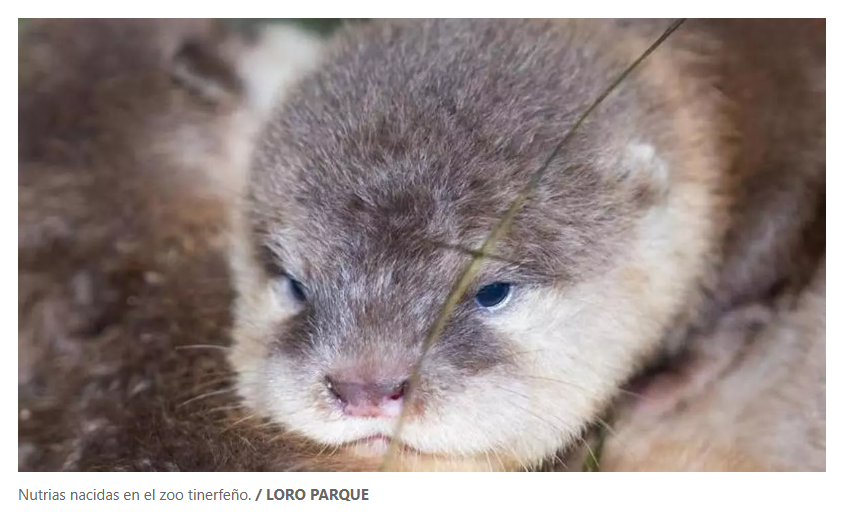
Loro Parque has welcomed four Asian small-clawed otter pups, the first offspring of the pair Arielle and Rudolf, who were selected for their genetic value and compatibility as part of a European conservation breeding programme.
The Asian small-clawed otter is classified as Vulnerable on the International Union for Conservation of Nature (IUCN) Red List, with wild populations having fallen by more than 30% since the 1990s.
The births form part of the European Association of Zoos and Aquaria (EAZA) ex situ breeding programme, which aims to support the long-term conservation of the species.
Tiny, blind and completely dependent on their parents
The four pups were born weighing just around 40 grams each and measuring approximately 10 centimetres.
At this early stage, they are completely blind and have no teeth. They will normally remain inside the nest for around 10 weeks, before gradually beginning to explore their surroundings.
Their parents will then play an important role in teaching them how to move around and swim.
Asian small-clawed otters are highly social animals and normally live in family groups. As they grow, young otters can also help their parents care for younger siblings.
A species facing growing threats
The Asian small-clawed otter, Aonyx cinereus, lives naturally in wetlands, swamps and lakes across parts of Southeast Asia.
Its numbers have declined significantly in some areas. In southern China, for example, Loro Parque says the species has only been recorded on three occasions over the past 20 years.
The main threats include loss and degradation of wetland habitats, pollution, hunting for their fur and conflict with fishermen.
Loro Parque’s zoological director, Mike Jordan, described the four births as an important step for the European breeding programme.
Loro Parque president Wolfgang Kiessling also highlighted the role of conservation breeding programmes in supporting research, raising awareness and helping protect species facing increasing pressure in the wild.