
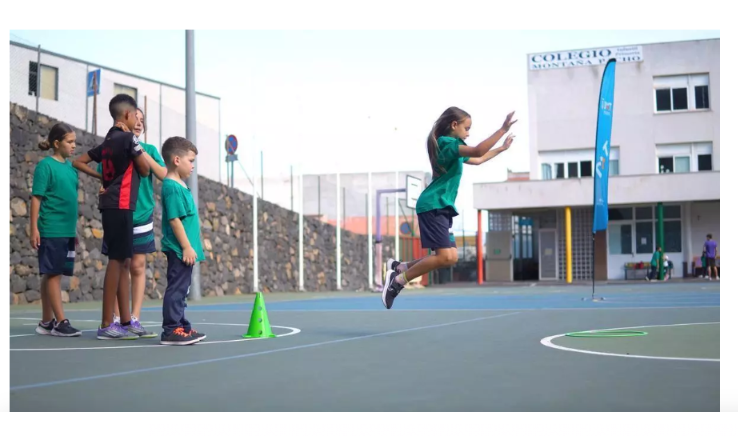
Getting children away from their screens and doing a bit more exercise isn’t always easy. Tenerife’s Cabildo is hoping to make it a little easier with a programme offering more than 2,000 students free after-school sports activities.
The Escuelas Activas programme is now running in 89 schools across the island, giving primary and secondary pupils two hours of organised physical activity each week. And there’s no cost to families.
It started in October and currently covers 56 primary schools and 29 secondary schools. Another four schools are expected to join shortly.
The activities depend on the age group. Younger pupils get a mixture of individual and team sports, with sessions designed to improve strength, stamina, speed and coordination. There’s also plenty of emphasis on learning to work together, building confidence and getting involved.
For secondary school students, there’s a choice of five activities: functional training, urban dance, ultimate frisbee, badminton and volleyball. Schools decide what to offer based on student preferences and the facilities they have available. They can also suggest other activities, provided they’re practical to organise.
There’s a good reason for the focus on teenagers. The figures quoted by the programme make for fairly uncomfortable reading.
Only 23.3% of girls and 49.2% of boys reach the physical activity levels recommended by the World Health Organisation. On top of that, 74% of girls and 54% of boys say their sporting needs aren’t being met. Some want to try something different, while others are simply looking for more opportunities to take part.
Now in its ninth year, Escuelas Activas is trying to make sport a normal part of the school week rather than something children have to organise outside school themselves.
The programme was launched this year with Yolanda Moliné, the Cabildo’s councillor for sport, in attendance. Three school sports events are also planned, recognising primary schools that do particularly well in encouraging extracurricular activities.
Two free hours a week won’t turn everyone into the next sporting superstar, obviously. But it gives thousands of youngsters the chance to try something new, get moving and perhaps find an activity they actually enjoy.