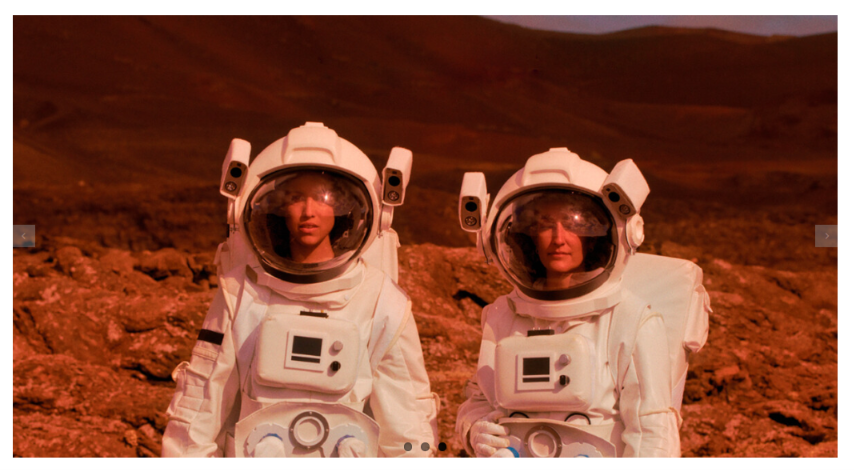
What do Tenerife’s volcanic landscapes have in common with Mars? Quite a lot, according to Volcania, Life on Mars, a new documentary by Tenerife filmmaker JuanMa V. Betancort, screening at TEA Tenerife Espacio de las Artes from Friday 30 October to Sunday 1 November.
The film will be shown at 7pm each evening, with Friday’s screening including a special introduction by the director and a question-and-answer session afterwards.
Written by Carla Valdés and supported by the Cabildo de Tenerife’s Department of Culture, the documentary brings together cutting-edge scientific research, the resilience of nature and traditional knowledge passed down through generations in the Canary Islands.
It explores how volcanic landscapes such as Mount Teide in Tenerife, Timanfaya in Lanzarote and the Tajogaite volcano in La Palma can help scientists understand the surface of Mars and prepare for future space missions.
From Lanzarote’s vineyards to the Red Planet
The story imagines NASA’s Perseverance rover landing in a region of Mars resembling the volcanic terrain between Timanfaya and Teide. Its mission is to search for signs of life.
Meanwhile, back on Earth, Lanzarote’s Timanfaya National Park becomes a training ground for future Mars missions. Scientists Alba Sánchez and Isabel Vera investigate whether the island’s traditional method of growing vines in volcanic soil could offer lessons for agriculture on another planet.
Planetary geologist Olga Prieto also studies the relationship between water and volcanic activity, a key area of research in the search for extraterrestrial life.
The documentary explores another side of these landscapes through artists such as Ildefonso Aguilar, who has drawn inspiration from the volcanic terrain to create visual and sound experiences.
Life finds a way
As Perseverance discovers organic compounds in an ancient Martian river delta, a new volcano erupts on La Palma, dramatically reshaping the island.
Yet the landscape is not as lifeless as it first appears. A year later, soundscape artist Carlos de Hita returns to record the first sounds of nature beginning to recover among the lava.
The film also follows the return of spring on the slopes of Teide, where bees feed on flowers growing in volcanic soils. These small but essential creatures raise an intriguing question about the role pollinators might one day play in supporting life beyond Earth.
The documentary even explores the development of a botanical greenhouse designed to help sustain human life in extraterrestrial environments.
It’s an unusual mix of science, art and the natural world, using landscapes familiar to people in the Canary Islands to explore some rather bigger questions about life elsewhere in the universe.
About the director
JuanMa V. Betancort is a Tenerife-born filmmaker, producer and screenwriter, and a member of Spain’s Academy of Cinematographic Arts and Sciences.
His previous work includes Playing Lecuona (2016), which won Best Documentary at the Montreal International Film Festival; Semilla del Son (2023), screened at the San Sebastián International Film Festival and SEMINCI; and La partitura del cosmos (2025), presented at the IN-EDIT festival.
He is also the founder of Insularia Films and helped create the MiradasDoc and Insularia-Islas del Mundo en Red festivals.
For anyone interested in Tenerife’s volcanic landscapes, space exploration or the surprising ways science and nature overlap, Volcania, Life on Mars offers a different perspective on the islands we call home.