
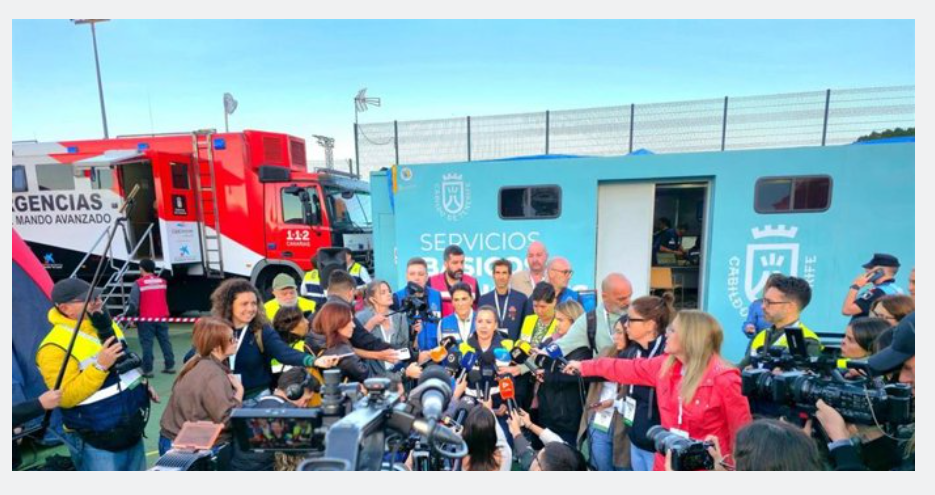
Tenerife has launched its second major volcanic emergency exercise, Volcanex 2026, testing how the island would respond if a volcanic eruption threatened residents, visitors and key facilities.
The exercise began at 7am on Thursday in Guía de Isora, with several simulated emergency operations taking place across the island.
The first scenarios included the evacuation of the Las Terrazas de Abama hotel and the Hogar Santa Gema senior centre in Santiago del Teide, alongside the simulated closure of Teide National Park.
Testing the emergency alert system
The exercise was triggered by a simulated orange alert sent to the public through the ES-Alert emergency notification system.
The aim is to test how quickly warnings can be communicated and how emergency services and other organisations would coordinate an evacuation during a volcanic emergency.
Tourists included in the exercise
For the first time, the tourism sector has been included as a key part of the drill.
At the Las Terrazas de Abama hotel, the scenario involved temporarily confining guests before evacuating non-residents by bus to a designated safe area in Adeje.
From there, the exercise tested hypothetical arrangements for transferring visitors to the airport and providing consular assistance where necessary.
It’s an important part of emergency planning for an island that welcomes large numbers of visitors who may be unfamiliar with local evacuation procedures.
Supporting vulnerable residents
The Hogar Santa Gema senior centre in Santiago del Teide was used to test an evacuation plan adapted to the needs of older residents.
A simulated triage process was carried out before transport, helping determine where people should be taken and what assistance they might need, including transport for those with reduced mobility.
The exercise also included simulated closure and evacuation procedures for Teide National Park and the surrounding Forest Crown Natural Park.
Volcanex 2026 is designed to test coordination between emergency services, public authorities and organisations responsible for residents and visitors, helping identify what works and where improvements may be needed before a real emergency occurs.