
Finding a parking space in Santa Cruz could soon become a little less frustrating, with the city planning a new system that will tell drivers where spaces are available before they reach the busiest areas.
The project will introduce 12 variable message signs at strategic points around the city, providing real-time information on parking availability across 24 separate parking zones in the centre.
The system is being developed by Santa Cruz City Council’s Mobility and Universal Accessibility department and is expected to be operational in early 2027.
The contract has been awarded to Kapsch TrafficCom at a cost of around €435,000, covering the supply, installation and integration of the equipment.
Less driving around looking for a space
Anyone who has driven around central Santa Cruz looking for somewhere to park will know the problem.
You can spend an impressive amount of time driving in circles, hoping that someone is about to pull out. Usually, they aren’t.
The new signs are intended to give drivers useful information before they reach the busiest areas, allowing them to choose a parking zone with available spaces rather than adding to the traffic in areas that are already full.
The council hopes this will reduce unnecessary traffic and improve the overall flow of vehicles through the city.
Santa Cruz sees a lot of traffic
The scale of the problem isn’t particularly surprising.
The TF-5 can carry up to around 110,000 vehicles a day, while the TF-1 sees approximately 80,000 to 90,000.
Once those vehicles reach Santa Cruz, demand for parking is particularly high in the city centre and neighbourhoods such as El Toscal and Salamanca, where residents, workers and visitors are all competing for the same spaces.
Having information about parking availability before entering these areas could make a noticeable difference.
There will also be an app
The signs aren’t the only part of the system.
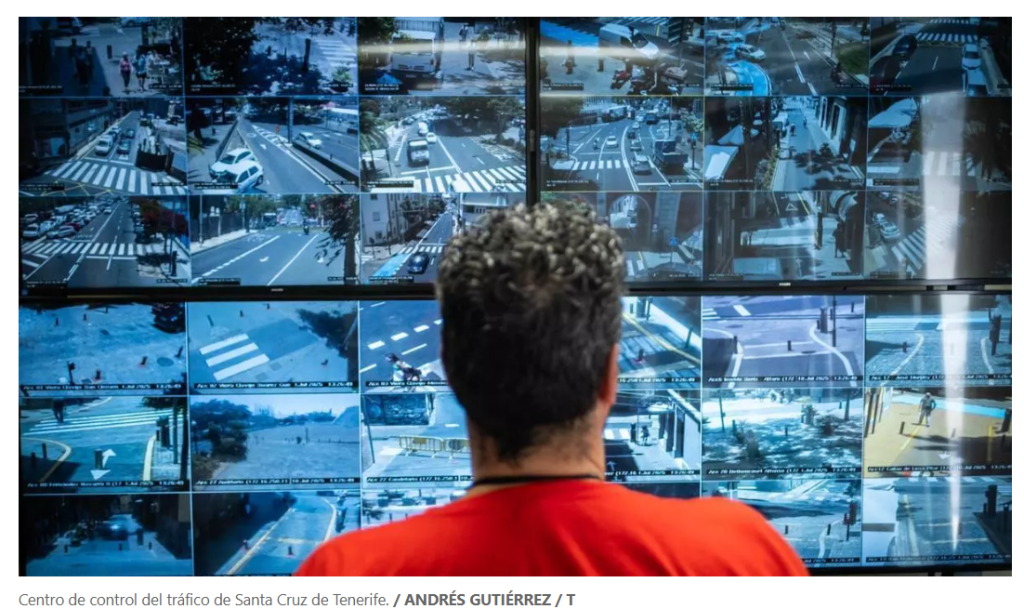
Parking information will also be sent to a traffic control centre, where the data can be analysed to understand how the parking zones are being used and how effective the system is.
A mobile app will also allow drivers to check availability, find the nearest parking facility and see information such as prices and opening times.
The system is expected to be fully integrated by early 2027, including the roadside signs, management platform and mobile application.
It won’t magically create more parking spaces in Santa Cruz, unfortunately. But knowing where the empty ones are should at least save a fair amount of pointless driving around.