Most people think beekeeping is about honey.
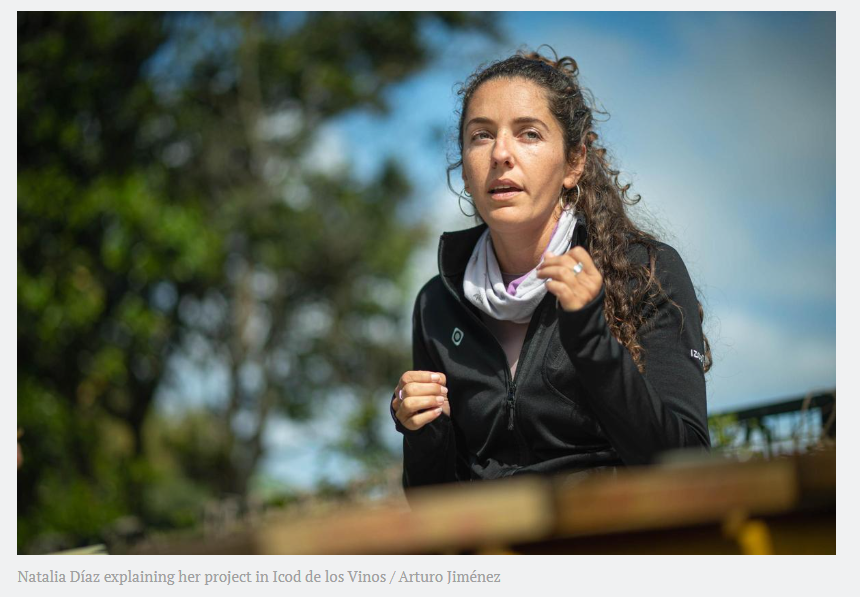
Natalia Díaz would tell you it’s much bigger than that.
The beekeeper from Icod de los Vinos has spent the last 15 years working with bees, turning what started as a university hobby into Ecoalpispa, the Canary Islands’ first space dedicated to ecological beekeeping, pollinator care and environmental education.
And it all started with a couple of hives at her grandmother’s house.
From Weekend Hobby to 200 Hives
While studying biology at the University of La Laguna, Natalia would head back to Icod at weekends to check on her bees.
One or two hives gradually became more.
Then a lot more.
Today, Ecoalpispa manages around 200 hives across a five-thousand-square-metre site.
The move from hobby to profession happened in 2020, after the pandemic, and the same year she received a Young Entrepreneur Award.
More Than Honey
Ecoalpispa isn’t just a working bee farm.
It includes:
• Honey and wax extraction areas
• Laboratory spaces
• Nature classrooms
• Educational zones for schools and families
The project combines production with education, helping visitors understand why bees matter.
And they matter quite a lot.
Natalia points out that around 75% of global food crops depend on pollinators.
Which is slightly more important than most of us probably realise while putting honey on toast.
Protecting the Canary Black Bee
One of Ecoalpispa’s focuses is the Canary black bee, a native species adapted to the islands and important for pollinating endemic plants.
But they also work to support wild bees.
The Canary Islands are home to around 150 wild bee species, many of which quietly keep local ecosystems functioning.
The farm creates habitats and flowering areas to support them naturally.
No chemicals.
No pesticides.
No mains electricity either.
The site runs on solar energy, with natural water treatment systems.
The Challenges Facing Tenerife’s Bees
It isn’t easy work.
Natalia says the biggest challenge remains drought.
Flowering seasons are shifting and becoming less predictable, making life harder for both plants and pollinators.
She also highlights pesticide use as a growing problem.
Her description was fairly blunt:
“For bees, it’s like taking a shot of poison every morning.”
Another concern is the arrival of non-native bees, which can hybridise with local species and introduce diseases.
Looking Ahead
Education is becoming an even bigger focus.
Ecoalpispa already works with schools and is preparing new projects for the next academic year.
The idea is simple enough.
Teach children early.
Protect what matters.
And hopefully inspire the next generation of people willing to spend their weekends surrounded by 200 hives.
Not everyone’s idea of relaxing…
But clearly Natalia found her thing.