Only in Spain could someone successfully market two pastries as:
“The smart one”
And
“The silly one”
…and somehow make it a centuries-old tradition.
The Famous Rosquillas of San Isidro
Every May, Madrid celebrates the fiestas of San Isidro with:
🎶 Music
💃 Traditional dress
🍋 Lemonade
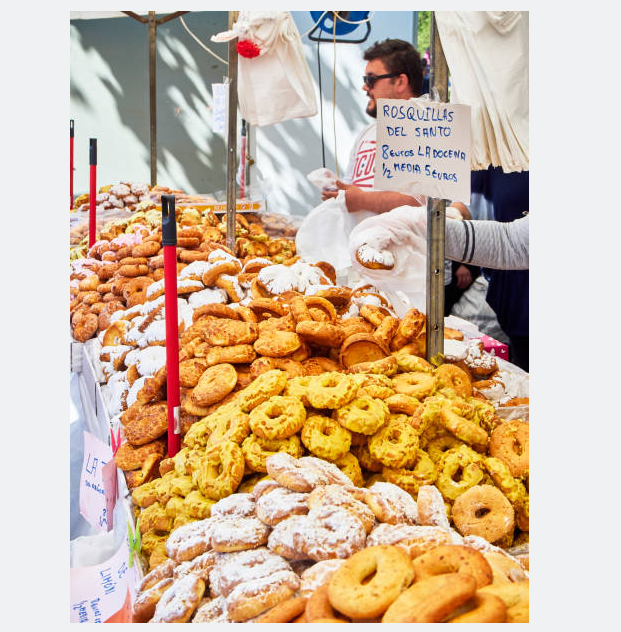
🍩 And enormous amounts of doughnuts
Known locally as:
- Rosquillas listas
- Rosquillas tontas
Two classic sweets that have become one of the most recognisable parts of the city’s patron saint celebrations.
What’s the Difference?
Both are made from a similar base using:
🥚 Egg
🌾 Flour
🫒 Oil
🌿 Aniseed
But the finish changes everything.
“Tontas” — The Original Simple Version
The tontas are the older, more traditional doughnut.
Plain.
No icing.
No decoration.
Just a dry baked doughnut with a mild aniseed flavour.
Simple and unpretentious.
Which honestly sounds quite appealing these days.
“Listas” — The Dressed-Up Version
The listas are the sweeter version, covered with:
🍋 Lemon glaze
🍬 Sugar icing
Giving them their brighter appearance and richer flavour.
Basically the same doughnut after discovering social media filters.
A Tradition Dating Back to the 19th Century
These doughnuts have been linked to San Isidro celebrations since the 1800s, particularly around:
📍 La Pradera de San Isidro
Where families traditionally gathered during the festivities.
Over time, the pastries became one of Madrid’s most recognisable food traditions.
Other Traditional Varieties
Alongside the famous listas and tontas, Madrid bakeries also make:
🤍 Rosquillas de Santa Clara
Covered in white meringue
🌰 Rosquillas francesas
Finished with chopped almonds
Most are still prepared artisanally every May using recipes passed down through generations.
More Than Just a Sweet Treat
For many Madrileños, these doughnuts are tied directly to childhood memories, family gatherings and local identity.
Buying a box during San Isidro is simply part of the tradition.
Like pretending you’ll “only have one” before eating four standing in the kitchen.
Worth Knowing
The names still make people smile every year.
Because somehow calling pastries “smart” and “silly” feels exactly like the kind of thing Spain would invent and collectively accept forever.