Would you rather be judged by a human judge or a robot? The question goes to the heart of how much we trust technology, what we expect from human judgement, and how much authority we’re willing to hand over when decisions affect our lives. It also raises whether impartiality can be programmed, and who supervises the systems we rely on.
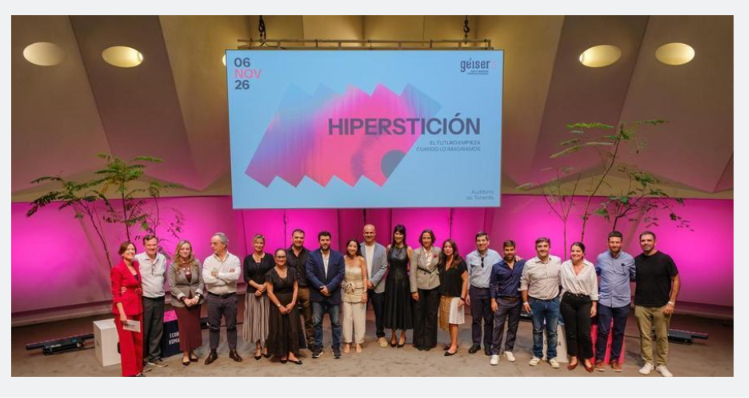
These questions were explored at the recent GÉISER Forum in Tenerife. This year’s theme was “Hyperstition: The Future Begins When We Imagine It”. The idea is that shared visions of the future shape what we do today, which raises the question of what kind of society we want to build in the Canary Islands.
Can we trust what AI tells us?
AI is becoming part of more and more decision-making. It can analyse huge amounts of data and speed up tasks that used to take hours.
The risk is that we rely on its answers without questioning whether they’re right. A response can look well structured and logical and still be wrong. What this means is that checking is essential.
Believing lies and doubting the truth
It’s easier than ever to create convincing falsehoods, while checking facts takes time, resources and expertise. On top of that, genuine information can now be dismissed by claiming it was manipulated with AI.
That leaves a double threat: believing things that aren’t true, and doubting things that are. Telling the difference can no longer depend only on what we see or hear. Checking sources and understanding context is crucial.
Journalism is dealing with exactly this. AI can help with searching and analysing information, but verification remains an essential part of the job. The speed at which something is produced and shared doesn’t guarantee it’s credible, or that the people sharing it are responsible.
Why does training matter?
To keep up with the changes. Using technology properly means knowing its limits and recognising when a human needs to step in. In sectors like justice, that touches on accountability, oversight and how much time professionals can give to the people who need them.
What does it mean for the Canaries?
The discussion also had a local angle. The Canary Islands have scientific expertise and opportunities in sectors like the space economy, which need collaboration and partnerships to reach their potential.
Businesses shape that future through everyday decisions about buying, hiring and how they work with their local area. Local products, training and jobs matter as much to the islands’ development as the bigger projects.
What about data?
Data shows how technology and people work together. In professional sport, it helps predict injuries, assess transfers and judge team performance. In business, it can spot needs and reduce risks.
But data is only as good as its quality, how it’s interpreted and how well the people using it understand it.
The same goes for company goals. For ambitions to become shared projects, people need to feel involved and recognised for what they contribute.
From ideas to action
The forum has led to the creation of the GÉISER Foundation, which carries on several of its initiatives:
- Climate shelters in schools
- Educational projects on sustainability
- A STEM-focused programme
- Building links between South Korea and the Canary Islands
The forum also introduced the upcoming “First Report on Humanism in the Canary Islands”, backed by Cajasiete. It aims to give a deeper understanding of the islands’ reality and what it means to put people first.
Dimple Melwani, CEO of Turismo de Tenerife, said spaces like the GÉISER Forum help people reflect together on the future they want for the islands. She said innovation, sustainability and talent are essential for tackling today’s challenges and finding new opportunities for growth. Sharing knowledge and working together across businesses, institutions and professionals, she added, is how ideas become action.
The forum was hosted by the GÉISER Foundation and sponsored by Biplaza, Cajasiete, Turismo de Tenerife, Kaudal, Flecher.co, Zaguán, Cronotropovial and Mayi Juárez. Organisations including Spain AI, Gehocan and the University of La Laguna also collaborated.