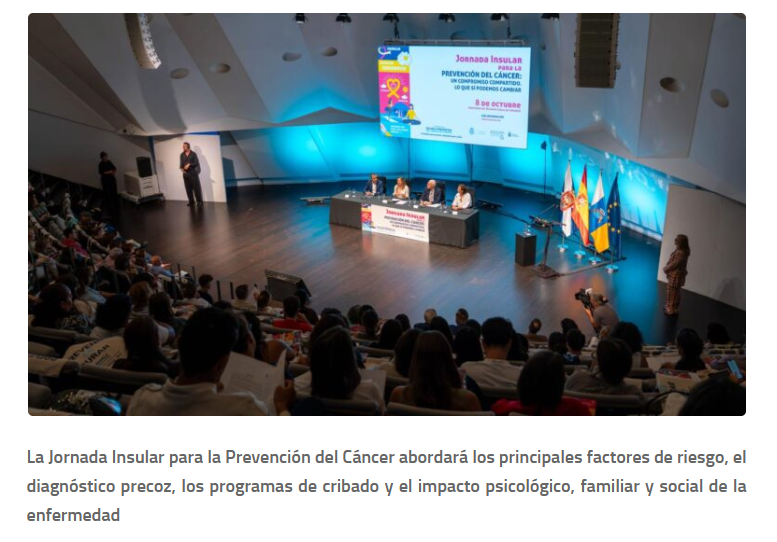
Cancer prevention and early diagnosis take centre stage in Tenerife on Thursday 8 October, as the Cabildo hosts its Island Day for Cancer Prevention at the Adán Martín Auditorium.
The event, running from 9am to 7:10pm, brings together healthcare professionals, specialists, educators and social services representatives to discuss what can be done to reduce cancer risks, improve early detection and support people living with the disease.
This year’s theme is ‘A Shared Commitment. What We Can Change.’
The aim is straightforward enough. Not every risk factor can be controlled, but there are things people can do, and better information can make a real difference.
Prevention starts with good information
Cabildo president Rosa Dávila says building a culture of prevention based on scientific evidence is essential, particularly when it comes to helping people make informed decisions about their health.
Juan Acosta, the island’s executive councillor for prevention education, will highlight the role of education and public awareness, including healthier lifestyle choices and recognising possible warning signs.
Diana Mora, director of the Tenerife Health Area, will focus on the importance of early diagnosis and making sure people know about the screening programmes available to them.
She also stresses the need to tackle misleading information about cancer treatments and risk factors. There’s plenty of information floating around online, but not all of it deserves to be taken seriously.
A full day of talks and workshops
The ten-hour programme is designed for up to 500 participants, particularly healthcare and education professionals, social services workers and volunteers involved in cancer prevention.
The morning session, titled ‘Knowing to Prevent’, will look at the current cancer situation in the Canary Islands.
Medical oncologist Miguel Ángel Cabrera Suárez and other specialists will discuss several areas, including childhood cancer, cancer in young adults and genetic influences.
The afternoon will turn to practical prevention, covering:
- Tobacco use and its links to cancer
- Alcohol consumption
- Nutrition and physical activity
- Sun exposure
- How to distinguish evidence-based advice from cancer myths and misinformation
The programme will also examine the psychological, social and family effects of cancer, including the emotional needs of patients, relatives and carers.
Early detection and the human impact
Cancer affects far more than a person’s physical health. It can place a considerable emotional and practical burden on families, while also creating challenges for the people providing care.
The event will therefore look at the wider impact of the disease, alongside the clinical side of prevention and treatment.
Screening programmes and early diagnosis will feature towards the end of the day, with an emphasis on encouraging people to make use of appropriate preventive health services.
José Montelongo, director of the Canary Islands School of Health and Social Services, will also highlight the importance of ongoing training for healthcare professionals as knowledge and approaches to cancer prevention continue to develop.
Prevention is a shared responsibility
The event is supported by the Canary Islands Health Service and the regional Education Department.
Dávila says cancer prevention cannot be left to the healthcare system alone. Schools, social services, public administrations, associations, families and the wider community all have a part to play.
The day’s discussions will finish with a presentation of the main conclusions at 7:10pm.
The message is that while nobody can eliminate every cancer risk, reliable information, sensible prevention measures, screening and proper support can all help improve outcomes and quality of life.