
A small change in how some serious infections are treated could make a noticeable difference to both patients and hospitals.
The idea is straightforward. Once a patient is stable enough, switch from intravenous antibiotics to oral medication rather than keeping them in hospital simply to continue receiving treatment through a drip.
The approach, known as Antibacterial Sequential Therapy, is being presented this Friday in Tenerife at Spain’s first National Congress on Rational Antibiotic Use.
From a drip to a tablet
The project comes from Hospital San Juan Grande in Jerez, Andalusia, where it has been running since last year.
Clara Meneses, who leads the hospital’s pharmacy service, says the change can make treatment more convenient for patients while reducing their time in hospital.
It can also reduce some of the risks associated with intravenous treatment, including infections and phlebitis.
And there’s another fairly obvious benefit.
If a patient no longer needs to remain in hospital simply to receive antibiotics through an IV, the bed can be used for someone who genuinely needs hospital care.
It isn’t suitable for everyone
There is a bit more to it than simply handing someone a packet of tablets and sending them home.
The medical team needs to assess each patient carefully, and the antibiotic being used must have an oral version with equivalent effectiveness.
Doctors, nurses and pharmacists also need to work together so that changing the treatment route is seen as part of good prescribing rather than someone interfering with the doctor’s decision.
Meneses says the approach can improve patient comfort and independence, while also helping hospitals make better use of their beds.
Part of the fight against antibiotic resistance
The project is also linked to a much bigger problem.
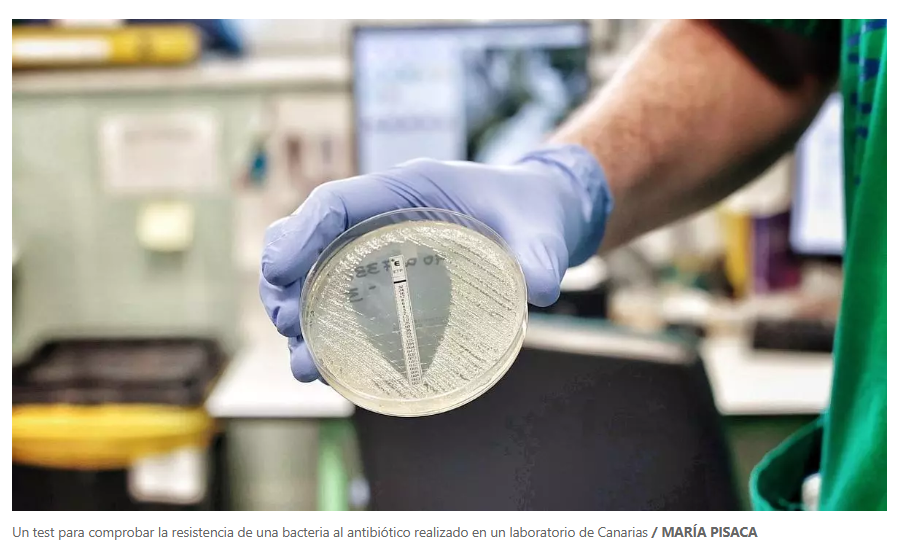
Antibiotic resistance is making some infections increasingly difficult to treat, and the issue is particularly concerning in the Canary Islands.
Some broad-spectrum antibiotics are already being affected by multi-resistant bacteria, including drugs such as imipenem and meropenem.
The basic problem is one we’ve been warned about for years. Bacteria adapt.
Antibiotics transformed medicine by turning infections that once killed people into conditions that could be treated. But the more antibiotics are used unnecessarily or incorrectly, the more opportunities bacteria have to develop resistance.
Meneses also points out that there is still a misconception that intravenous antibiotics are somehow automatically stronger than oral medication.
They aren’t always.
Where the clinical circumstances allow it, changing the route can be a much simpler solution.
A small project with bigger ambitions
The Jerez initiative has initially focused on a relatively small group of patients and two specific antibiotics, but the results have encouraged the team to consider expanding the approach to other antimicrobials.
The hope is that other hospitals will look at the experience and consider whether a similar system could work for them.
That is one of the reasons the project is being presented at the Tenerife congress.
It isn’t about replacing IV antibiotics across the board. Some patients absolutely need them.
It’s about making sure patients who don’t need intravenous treatment aren’t kept in hospital simply because that’s how the antibiotics have always been administered.
Sometimes improving healthcare doesn’t require a revolutionary new drug.
Sometimes it’s just about doing the same thing a slightly better way.