Artificial intelligence has officially reached Tenerife’s vineyards…
And not in the way most people imagine.
While many still think of AI as chatbots and image generators, one winery in northern Tenerife has quietly been using the technology for years to improve harvests, reduce environmental impact and manage crops more efficiently.
The Winery Leading the Change
📍 Viñátigo Winery — La Guancha
Owned by Juan Jesús Méndez Siverio, Viñátigo has become one of the Canary Islands’ pioneers in combining traditional viticulture with modern technology.
And apparently they started long before AI became fashionable.
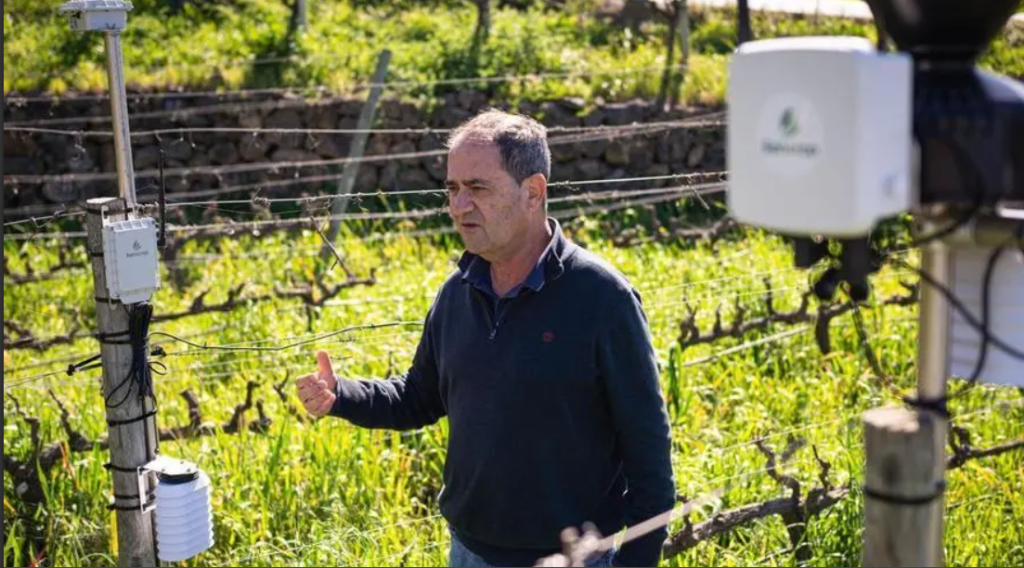
Sensors in the Vineyards for Decades
The winery has spent around twenty years collecting vineyard data through sensors installed across its land.
That information now feeds artificial intelligence systems capable of analysing:
- Soil moisture
- Temperature
- Solar radiation
- Wind direction
- Humidity
- Irrigation needs
- Disease risk
Basically… the vineyards are constantly talking back to the system.
Predicting Problems Before They Happen
One of the biggest advantages is prevention.
AI can predict fungal diseases like:
🍇 Powdery mildew
🍇 Downy mildew
Allowing treatments to happen earlier and with fewer chemicals.
The winery says this helps reduce environmental impact while protecting crops more sustainably.
Beyond Organic Farming
Viñátigo describes its approach as:
🌱 Regenerative agriculture
Which goes beyond standard organic farming methods.
The goal isn’t just producing wine…
But improving biodiversity, reducing water use and lowering the overall ecological footprint.
The Vineyards Are Run Digitally
Instead of traditional paper notebooks, the winery now uses a fully digital field management system.
Each vineyard plot appears on-screen using colour-coded maps and bubbles showing:
🟢 Safe conditions
🔴 Disease risk
🟠 Areas already treated
Giving workers and technicians real-time information directly from the vineyards.
Powered by Solar Energy Too
Despite concerns about AI’s high energy consumption, the winery says it offsets this through:
☀️ Solar-powered operations
💧 Water recycling systems
🌿 Plant cover acting as carbon sinks
According to the winery, their carbon footprint is actually negative.
Tradition Meets Technology
What makes the story interesting is that it doesn’t replace traditional winemaking…
It supports it.
Tenerife’s vineyards still rely on experience, climate knowledge and generations of agricultural practice.
There’s just a lot more data involved now.
And somewhere in La Guancha, a vineyard technician is probably checking fungal predictions on an app instead of guessing by looking at the sky.