
A hospital in Tenerife has introduced a new treatment for certain cases of chronic lower back pain, offering patients an option that doesn’t involve traditional surgery.
The Pain Unit at Hospital Universitario Nuestra Señora de Candelaria has carried out its first procedures using intraosseous basivertebral nerve ablation, a minimally invasive technique that uses radiofrequency to target the nerves responsible for transmitting pain from inside the vertebrae.
The procedure is designed for patients suffering from vertebrogenic pain, which originates in the vertebral bodies and the endplates surrounding them.
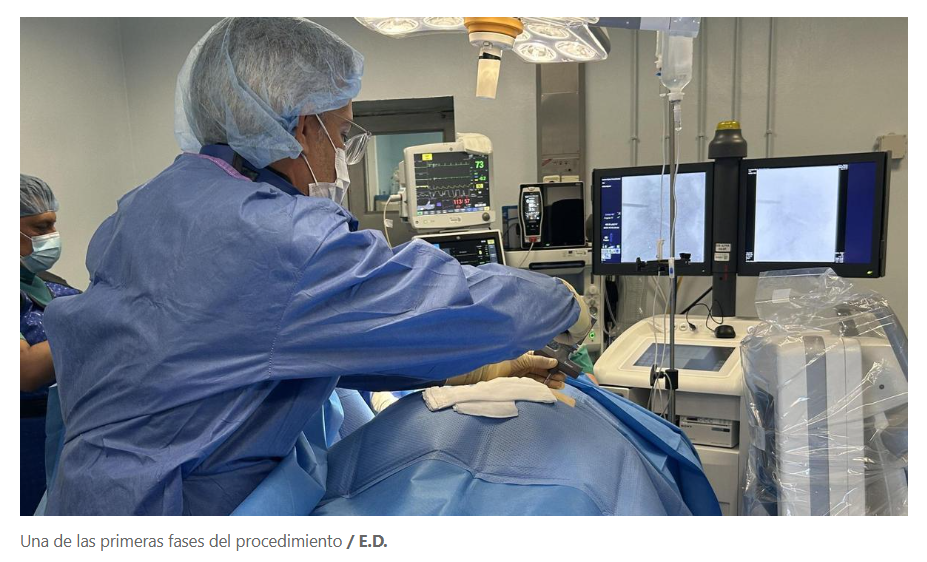
A probe is inserted through the skin and into the vertebra. Once in position, radiofrequency is applied to deactivate the relevant nerve endings. No implants are required, and the structure of the vertebra is not altered.
Another advantage is that patients can usually return home on the same day.
First Two Patients Report More Than 90% Pain Reduction
The first two procedures at La Candelaria involved a 66-year-old woman and a 49-year-old man.
Both operations were carried out in the hospital’s day-surgery theatres. According to the hospital, both patients have reported a reduction in pain of more than 90%.
The technique is intended for people with chronic vertebrogenic lower back pain who have not achieved sufficient results through other treatments.
Until now, treatment options could include physiotherapy, injections and medication. In certain cases, spinal fusion surgery may also have been considered.
This new approach provides another option for carefully selected patients, without the need for implants or major structural changes to the spine.
Six Months of Preparation
The introduction of the procedure was led by Javier Arranz, head of section at the hospital’s Pain Unit, following six months of preparation.
The team completed specialist training in Bilbao and Madrid in July. For the first two procedures, they were also supported by Javier de Andrés Ares, head of the Pain Unit at Hospital La Paz and a specialist in the technique.
La Candelaria’s Pain Unit has been treating patients with persistent pain for around five decades. Over the years, it has introduced a range of treatments, including neurostimulator implantation to help regulate pain intensity.
Chronic Pain in the Canary Islands
According to figures provided by the regional health authorities, 27.1% of people in the Canary Islands experience chronic pain, compared with a national average of 25.9%.
Of those patients, approximately one in six is reported to suffer from vertebrogenic pain.
The new treatment won’t be suitable for everyone with back pain, but it gives specialists another tool when conventional treatments haven’t provided enough relief. And when your back has been causing problems for years, having another option is certainly welcome news.