
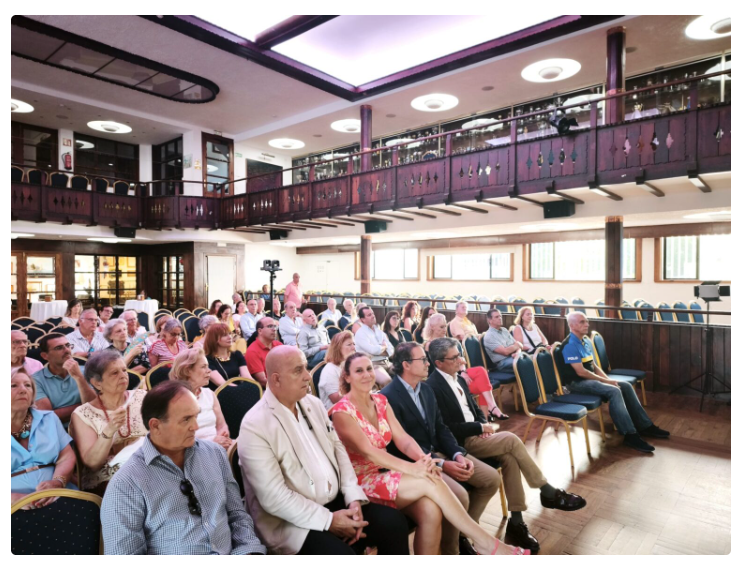
The Real Club Náutico de Tenerife has restarted its cultural programme with a fascinating story from the island’s past.
The first event featured Nelson Díaz Frías, a magistrate and official chronicler, who gave a talk entitled “Rosalía Gómez, the Last Slave of Tenerife (1801-1874)” in the club’s Noble Hall.
It is the story of a woman who has largely disappeared from Tenerife’s collective memory, despite having lived through an important and uncomfortable part of the island’s history.
The story of Rosalía Gómez
Rosalía Gómez was born in Charco del Pino, Granadilla de Abona, in 1801.
She is recognised as the last enslaved person on Tenerife and one of the final documented cases of slavery in Spain.
Díaz Frías used the talk to look at her life and the wider reality of slavery in the south of Tenerife during the 19th century.
Rosalía was born into slavery, the daughter of another enslaved woman, meaning her family had experienced several generations of servitude.
Her story gives an insight into a part of Tenerife’s history that is easy to overlook when looking at the island today.
Keeping an important history alive
Díaz Frías has spent years researching Rosalía Gómez’s life, with his findings published in the book “Rosalía Gómez (1801-1874). The Last Slave of Tenerife”, released in 2020.
The talk was not simply about dates and historical records. It was also about remembering someone whose existence was largely forgotten for many years.
And that’s arguably one of the more interesting things about local history. There are plenty of stories sitting beneath the surface that tell us a lot about how Tenerife became the place it is today.
The event also marks the return of the RCNT’s cultural programme, with further activities planned throughout September for club members and the wider public.