
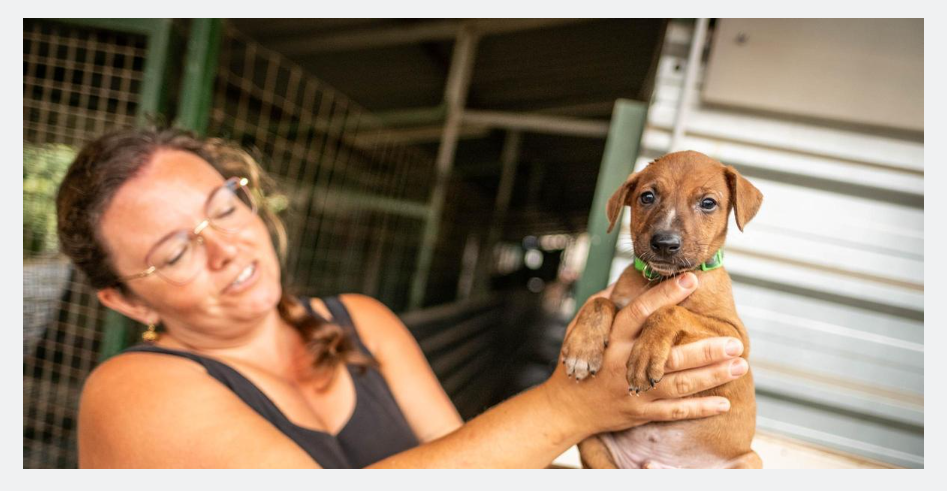
Fifty years is a long time to be doing anything.
But for the International Animal Shelter in Los Realejos, it means 50 years of rescuing, caring for and finding new homes for dogs that, in many cases, have been abandoned when they became inconvenient.
Not exactly a reason to celebrate the human race.
The shelter, located near the La Cruz Santa pond, is marking its 50th anniversary this year. It moved to its current site almost a decade ago, having previously operated in Puerto de la Cruz and La Orotava.
Owning its own land has given the organisation more independence and a better base from which to continue its work.
A second home for the volunteers
For Noemí García, who has volunteered at the shelter for 16 years, the place has become a second home.
She and the other volunteers dedicate countless hours to looking after the dogs, rescuing animals in need and preparing them for a new life.
When a dog arrives, the process begins straight away. The animal receives veterinary attention, is treated for parasites and spends between 10 and 15 days in quarantine before joining the other dogs.
At the moment, around 54 dogs are living at the shelter, although that number can change quickly.
In July alone, 40 dogs arrived and 30 were adopted.
It is a constant cycle. Dogs come in, hopefully find a family, and then more arrive.
The problem has not gone away
Despite decades of work by organisations like this one, abandonment and mistreatment remain a serious problem.
And, according to Noemí, it is not always down to money.
Some people simply decide that their dog no longer fits into their life.
A change of home. A holiday. A new landlord. Whatever the reason, the dog is suddenly the problem that needs sorting out.
There is also the old idea that a dog with a garden has everything it needs. It doesn’t. A bit of outside space is no substitute for attention, exercise and actually treating the animal like part of the family.
Rising veterinary costs
The shelter is also dealing with an increase in parasites and other health problems, pushing veterinary costs higher.
That means more money is needed simply to keep the dogs healthy while they wait for adoption.
And that is really what the shelter is.
Not their final home.
Just the place where they wait.
Visitors might see wagging tails and happy faces, but every dog there has ended up without the home it should have had.
For 50 years, the volunteers at the International Animal Shelter in Los Realejos have been trying to change that.
Hopefully, they will continue doing it for many more years.
Although, if we were doing things properly, there would be a lot less need for them in the first place.
Click here to read the original article.