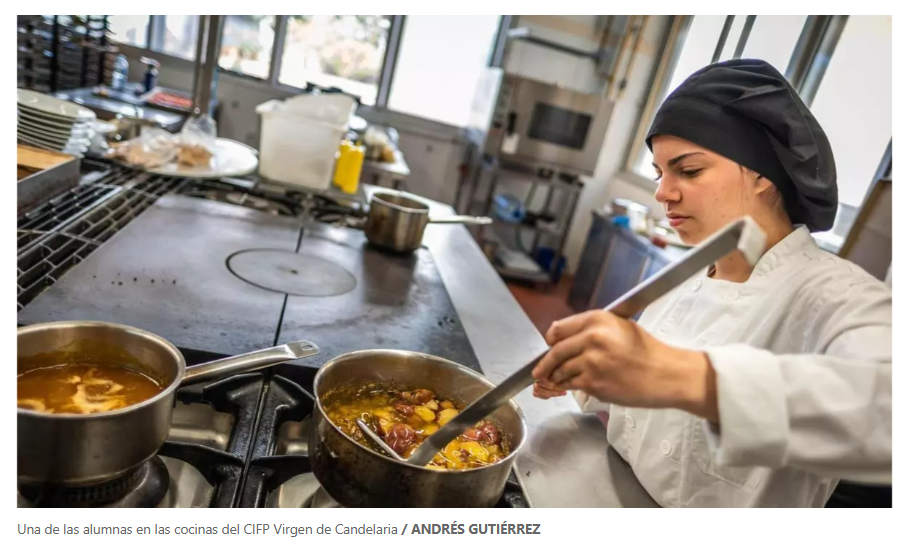
Students at CIFP Virgen de Candelaria have been exploring some of Tenerife’s lesser-known local ingredients as part of Gastronomía Sprint, an innovative project developed by Turismo de Tenerife and the prestigious Basque Culinary Center.
The initiative challenged 25 culinary students to research, experiment and create new dishes using traditional Canarian ingredients that have largely disappeared from modern kitchens. Among the products featured were prickly pear cactus paddles, Canary Island yams, horse mackerel, wahoo fish, local beans, safflower and traditional wheat varieties.
Working in teams, the students combined theory and hands-on experimentation, developing everything from sourdough bread, kombucha and gels made from cactus paddles to sashimi, cured fish and creative desserts using yam as the main ingredient.
Learning Through Experimentation
According to chef instructor Enrique Quintero, the project encouraged students to embrace trial and error while developing professional culinary skills.
“We researched, tested, failed many times and started again. That was one of the most valuable parts of the experience,” he explained.
One of the most unusual ingredients was a 25-kilogram wahoo fish, which students used almost entirely, creating dishes ranging from sashimi and grilled preparations to cured and dehydrated products.
The project also highlighted Tenerife’s agricultural heritage and encouraged students to look at local ingredients from a fresh perspective.
A Global Influence on Local Cuisine
The diverse backgrounds of the students helped inspire unique creations. Participants from Cuba, Venezuela, Italy and the Philippines brought different culinary influences to the challenge.
Student Liennis Ferrer created a menu featuring yam hummus with saffron pearls and orange juice, arepas with quince, smoked Canarian cheese and lime foam, and a dessert combining yam cream, toasted corn and goat’s whey.
She described the experience as both challenging and rewarding, particularly because many of the ingredients were completely new to her.
Looking Ahead
Organisers hope the project will continue to grow in future editions, providing students with even greater opportunities to explore local products, sustainability and food innovation.
For both teachers and students, the programme offered far more than recipe development. It provided a real-world introduction to research, creativity and problem-solving, while helping preserve ingredients and traditions that form part of Tenerife’s culinary identity.