
Everyone knows the saying… every house starts with the foundations.
These days though, the real problem is getting the first brick laid in the first place.
The housing situation in the Canary Islands has been getting tighter for years. Prices up, availability down, and plenty of people struggling to find somewhere affordable to live.
Now a new technology is starting to appear on the island that might speed things up a bit.
Printing houses instead of building them
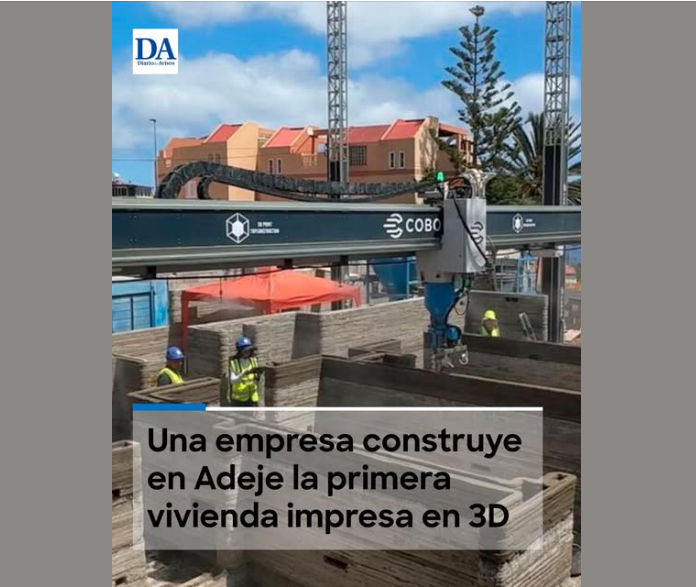
A company called 3D Print Construction has begun introducing large-scale 3D printing technology to Tenerife.
Yes… you read that correctly.
Instead of building walls in the traditional way, giant printers lay down layers of concrete, gradually creating the structure of a house. Bit by bit, layer by layer, the walls take shape.
It sounds futuristic, but it’s already being used in a number of countries.
And the big attraction is simple. Speed and cost.
According to industry estimates, this system can reduce construction time by as much as 70% and cut building costs by around 25% compared with conventional building methods.
First test project already completed
The company has already completed one pilot project on the island.
A 160 square metre home in Tabaiba Alta had its structural walls printed in just 12 days.
Anyone who has ever watched a traditional build crawl along for months will know that’s pretty impressive.
A bigger project planned in Adeje
The next step is much more ambitious.
The company is now planning a 16-home residential building in Adeje, which would become the first development of this type in the Canary Islands.
If everything goes according to plan, the structure of the building could be completed in roughly two months.
That’s the sort of timeframe that gets attention when you’re talking about housing shortages.
Could this actually help?
Whether 3D printed housing becomes common in Tenerife remains to be seen.
Construction regulations, planning permission and the usual bureaucracy still apply… and anyone who has dealt with Spanish paperwork knows that machines might work quickly, but the system doesn’t always move at the same speed.
Still, if the technology proves reliable, it could become another tool to help increase housing supply across the islands.
And right now, anything that helps get more homes built a bit quicker is probably worth looking at.
If you’d like to see the original article, click here.