
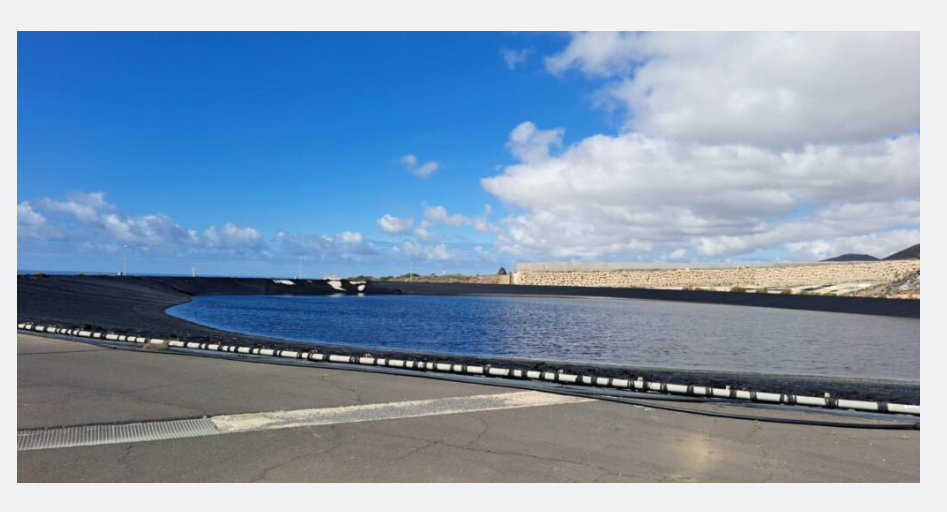
Tenerife’s water reserves are heading in the right direction, with reservoirs holding almost 450,000 cubic metres more water than at the same time last year.
At the start of October, reservoirs managed by BALTEN, the Cabildo de Tenerife’s public water company, held a total of 1,854,855 cubic metres, giving them an average capacity of 36.8%.
Valentín González, the island’s Minister for the Primary Sector, welcomed the year-on-year improvement, although water levels still vary considerably between the north and south of the island.
The north is holding more water
Reservoirs in northern Tenerife contain 1,321,897 cubic metres of water, with an average fill level of 38.5%.
Some locations are doing particularly well:
- Aguamansa, La Orotava: 88% full
- El Palmar, Buenavista: 74.1% full
- Teno Alto: 72.8% full
Those figures offer some welcome breathing room for agricultural irrigation, although there’s still a long way to go before anyone can stop keeping an eye on the water supply.
The south has some catching up to do
Reservoirs and water tanks in southern Tenerife hold 532,958 cubic metres, putting average capacity at 33.2%.
The Lomo del Balo reservoir in Guía de Isora is currently 44.6% full.
Water levels in the south have also been affected by waterproofing work at the Valle San Lorenzo reservoir in Arona. The good news is that the reservoir is expected to begin receiving regenerated water from the metropolitan area during October, using a pipeline connected to the island’s hydraulic network.
Making every drop count
González stressed the importance of managing Tenerife’s water resources carefully to maintain a reliable supply for irrigation over the coming months.
With seasonal weather conditions always capable of throwing a few surprises into the mix, the improvement on last year is encouraging. But with overall reservoir capacity still below 40%, careful water management remains essential, particularly for the island’s agricultural sector.