
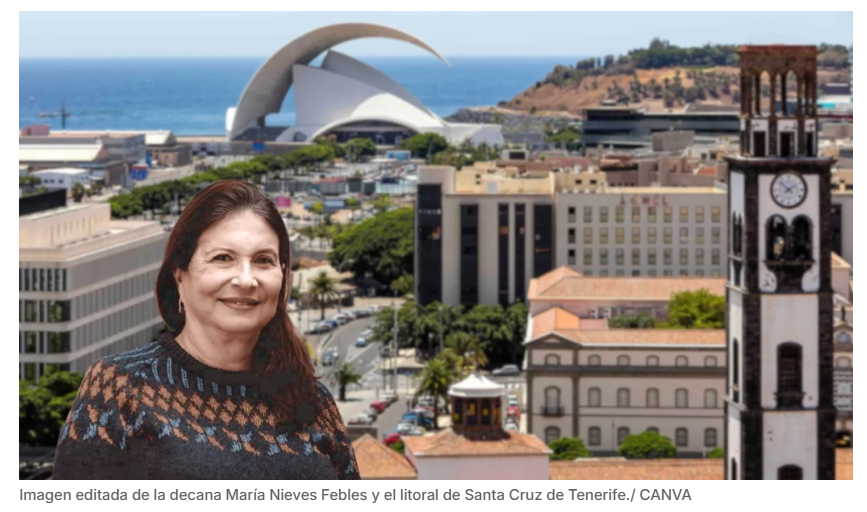
As temperatures continue to rise, one of Tenerife’s leading architects believes it’s time for Santa Cruz to rethink how the city grows.
María Nieves Febles Benítez, Dean of the Official College of Architects of Tenerife, is calling for a long-term climate strategy that would reshape the capital with more green spaces, fewer cars and better-designed public areas to help residents cope with increasingly hot summers.
She argues that climate change is no longer a future concern. It’s already changing the way cities need to function.
A Roadmap Instead of Isolated Projects
Speaking to Atlántico Hoy, Febles acknowledged that Santa Cruz has made progress in improving public spaces in recent years.
However, she believes many initiatives remain disconnected.
Rather than introducing individual projects one by one, she says the city needs a coordinated plan covering urban planning, public transport, housing and public spaces, all working towards the same climate goals.
More Trees, More Shade
One of her biggest priorities is increasing the amount of greenery throughout the city.
Planting more trees would create natural shade, reduce temperatures and improve the quality of public spaces, while helping create what she describes as urban climate refuges where people can escape the summer heat.
She also believes expanding pedestrian areas would make the city more enjoyable to live in while reducing the dominance of cars.
Building for Tenerife’s Climate
Febles also argues that building regulations should better reflect the unique conditions found in the Canary Islands.
While Spain’s current building standards have improved energy efficiency, she believes they don’t always take into account local factors such as humidity, wind exposure and the island’s varied microclimates.
She says future planning should recognise that different parts of Tenerife have different environmental conditions and should be designed accordingly.
Improving Existing Homes
Alongside new developments, Febles believes there is enormous potential in upgrading older residential buildings.
Improving insulation and refurbishing façades would help keep homes cooler in summer and warmer in winter, reducing energy consumption while improving comfort for residents.
Only once buildings become more energy efficient, she argues, should additional measures such as solar panels or air conditioning be considered.
Preparing for a Warmer Future
According to Febles, the temperatures scientists have been predicting for years are now becoming a reality.
She believes preparing for climate change isn’t just the responsibility of local authorities but something that requires cooperation from residents, planners and businesses alike.
For Santa Cruz, that means developing a clear long-term strategy that makes the city greener, cooler and better prepared for the decades ahead.