
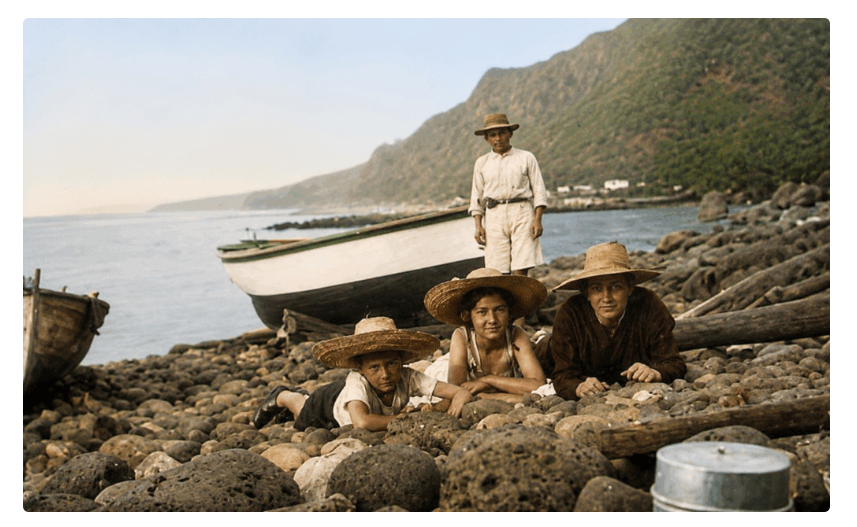
Some of Tenerife’s best-loved traditions don’t begin with grand plans. They start with a handful of people who care enough to create something that lasts.
That’s exactly how the devotion to Our Lady of Carmen began in La Hoya, Punta del Hidalgo, nearly a century ago. Today, it’s one of the area’s most important religious celebrations, but its origins can be traced back to a small group of families who simply fell in love with this stretch of Tenerife’s northeast coast.
A Summer Escape That Became Something More
During the early decades of the 20th century, Punta del Hidalgo became a popular summer destination for families from La Laguna.
They were drawn by the fresh sea air, the peaceful surroundings and the charm of what was then a small fishing village. Many built summer homes in La Hoya, spending the warmer months alongside local fishing families.
Over time, those friendships grew into something much deeper than seasonal visits.
Creating a Lasting Legacy
In the late 1920s, several of these summer residents decided to establish a chapel dedicated to Our Lady of Carmen, the patron saint of fishermen.
The chapel and the statue of the Virgin were donated by families including Ciro de Ucelay Marcoide, the Cambreleng family, Carlos Nóbrega, Eugenio Martín, Víctor Núñez and the Renshaw family.
Their contribution helped create a tradition that has continued for generations and remains an important part of local life.
The First Procession
The first procession took place in 1929, when the image of the Virgin was carried through the streets of La Hoya before making its symbolic journey towards the sea.
For a community whose livelihood depended on fishing, the connection between the Virgin and the ocean carried deep meaning.
What began as a modest local celebration gradually developed into one of the most distinctive religious festivals in the municipality of La Laguna.
A Tradition That Continues Today
Nearly a century later, the Virgen del Carmen celebrations remain one of the highlights of the summer calendar in Punta del Hidalgo.
While the festival has grown over the years, its roots are still firmly linked to the close relationship between the sea, the local fishing community and the families who helped establish a tradition that continues to bring the community together every summer.