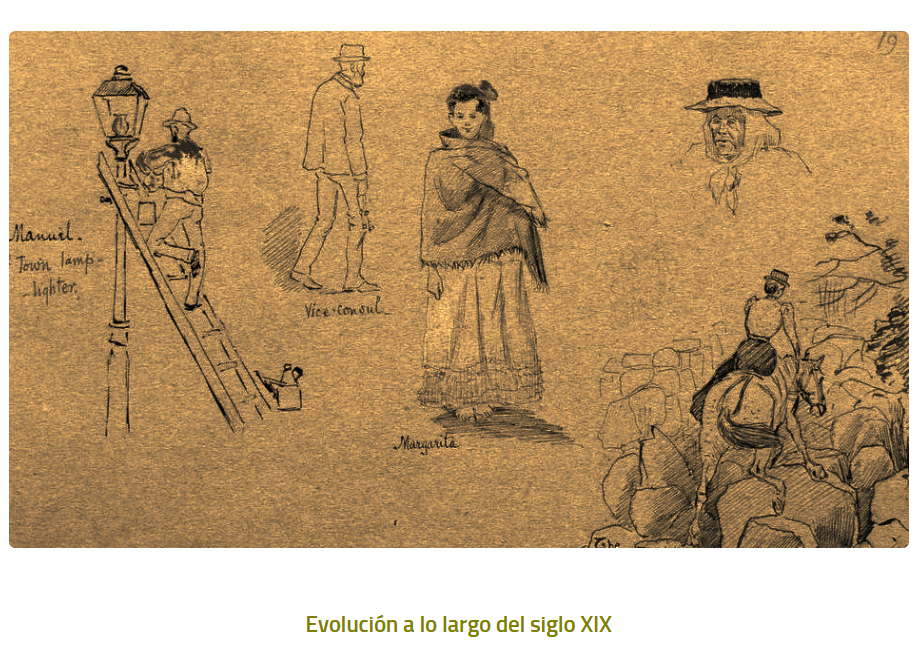
If you look at old photos or paintings of Tenerife, the clothing stands out straight away.
But what most people don’t realise is how much it changed over the 19th century… and how quickly tradition started to mix with outside influence.
What Actually Changed
It wasn’t one big shift… more a slow transition.
- Industrial fabrics started to appear
- European fashion began creeping in
- Traditional clothing was gradually replaced
Nothing dramatic overnight… just steady change.
That said, rural areas held on much longer. In some places, traditional dress was still part of daily life well into the 20th century.
Where This Information Comes From
A lot of what we know isn’t guesswork.
It’s been pieced together from a mix of sources:
- Olivia Stone (1887) writing about daily life in Tenerife
- Sabino Berthelot documenting the islands in the 19th century
- Collections from the Museo de Historia y Antropología de Tenerife
- More recent ethnographic studies
So there’s a solid base behind it.
More Than Just Clothing
This isn’t really about clothes.
It’s about how people lived.
What they could afford, where they lived, what influenced them… all of that shows up in what they wore.
You can see class differences, economic changes, even the island opening up more to the outside world.
Why You Still See It Today
Those traditional outfits you see at romerías and local fiestas…
They’re not just for show.
They’ve been rebuilt and preserved as part of the island’s identity… a way of holding onto something that would’ve otherwise disappeared completely.
Final Thought
It’s easy to see traditional dress as just “old clothing”.
But it’s really a snapshot of how Tenerife changed over time… quietly, gradually, and in a way that still shows up today if you look closely enough.