Trying to follow what’s going on with sustainability in Tenerife can feel a bit like wading through treacle.
Lots of talk. Plenty of panels. Big words being thrown about.
But every now and then, something actually worth paying attention to pops up.
This week in Adeje is one of those.
What’s going on in Adeje
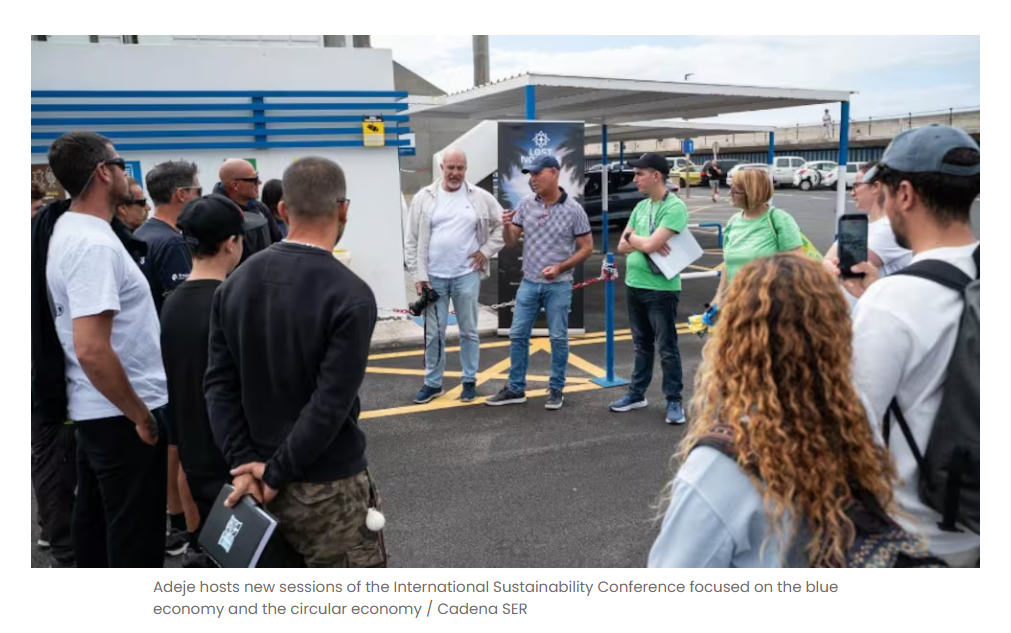
They’re hosting a set of sustainability sessions focused on what they call the “blue economy” and “circular economy”.
Now, before your eyes glaze over…
What they’re really talking about is how to make money from the sea without wrecking it, and how to stop wasting quite so much stuff on land.
Simple enough when you strip it back.
They’ve got a mix of international speakers, marine experts, and local decision-makers all getting involved. The main sessions are happening at the Centro de Desarrollo Turístico on the 17th and 19th.
So yes, there’s a fair bit of talking involved.
The bit that actually matters
Alongside all that, they ran a clean-up at Puerto Colón.
Ten people. Six hours. Just over 10 kilos of rubbish pulled out.
And here’s the interesting part…
That’s not a huge amount for a marina that busy.
Which suggests things aren’t as bad as some might expect. There’s already a level of care there from the people using it day to day.
Most of what they found won’t surprise you either. Glass bottles, bits of plastic, cans… standard tourist leftovers.
Nothing glamorous. Just reality.
Why this isn’t just background noise
If you’ve got a place here… or you’re thinking about buying… this sort of thing does matter.
Clean water, tidy marinas, and a general sense that somewhere is looked after all feed into one thing:
How desirable the area is.
And that directly affects property prices, rentals, and long-term demand.
People don’t come to Tenerife for polluted coastlines.
A quick reality check
That said, this is still Tenerife.
You can have a sustainability conference in the morning and see someone flick a cigarette out the car window an hour later.
Progress here tends to happen slowly… and a bit unevenly.
But getting local businesses, boat crews, and institutions involved is how things start to shift.
Not perfectly. Not quickly. But steadily.
If you want the full story, you can read the original article here.