
If you’ve ever driven up to Icod de los Vinos, chances are someone has said to you, “You’ve got to see the dragon tree.”
And to be fair… you probably should.
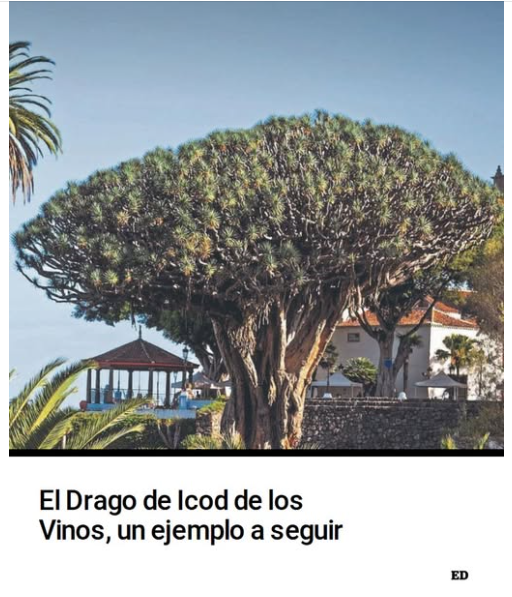
The Drago Milenario is one of those things in Tenerife that locals are proud of and visitors are slightly surprised by. It’s a tree that looks like it belongs on another planet. Thick trunk, umbrella of branches, and a shape that makes you wonder how on earth it’s still standing.
But the interesting bit isn’t just how it looks. It’s the fact that it’s still here at all.
The famous Drago of Icod has been around for more than 800 years and was declared a National Monument back in 1917. That alone tells you something about its importance, not just for Icod, but for the Canary Islands as a whole.
The thing is, the tree hasn’t exactly had an easy life.
Back in the early 1900s the area around it wasn’t exactly treated like a national treasure. In fact, in 1924 the land around the tree was used as a rubbish dump. They even had to put up a sign telling people to stop throwing their rubbish there.
Not exactly the respectful treatment you’d expect for an 800-year-old botanical icon.
Then came the usual problems that old public landmarks tend to suffer. Vandalism, damage and even a small fire in the trunk in 1983.
That fire turned out to be a bit of a wake-up call.
At the time, the mayor asked a local botanist, Dr Juan Alberto Rodríguez, to examine the tree. His verdict wasn’t great. The drago was struggling and something had to be done if it was going to survive much longer.
So they brought in a specialist from the United States called Kenneth Allen, an expert in large and historic trees.
What he discovered changed everything.
For starters, there was a road passing just a few centimetres from the tree, which clearly wasn’t helping. The soil around it had become heavily compacted and the tree needed breathing space.
Then there was the issue of too much water. Ironically, the surrounding gardens were being irrigated and the moisture was causing rot inside the trunk. Dragon trees don’t need watering like that. They’re perfectly happy surviving on rainfall.
One of the more unusual solutions was to consider installing an internal support structure inside the trunk to help carry the weight of the tree itself.
Slowly, things began to change.
The nearby road was diverted and plans were put in place to create what we now know as the Drago Park, giving the tree the natural surroundings it needed.
Today the park covers around three hectares and is actually a lovely place for a wander. There are walking paths, traditional irrigation channels, old agricultural walls and even historic corners like the Callejón del Molino. The Caforiño ravine also runs through the park, which helps give the place a more natural feel.
In other words, the tree finally got the environment it deserved.
According to Gerardo Rizo, the councillor responsible for tourism and the company that manages the site, the decisions taken in the 1980s were crucial in saving the tree. In recent years the budget for maintaining and protecting it has also increased significantly.
Which is probably a sensible move when you’re responsible for one of the most recognisable natural symbols in the Canary Islands.
Day-to-day care of the tree is overseen by agricultural engineer Juan Manuel Luis Zamora and his maintenance team. They carry out regular inspections, monitor humidity inside the trunk, manage the crown of the tree and control visitor access around the root system.
There’s even modern tech involved now.
Drones are used for monitoring, specialised arboriculture techniques are applied to help maintain the structure, and wind sensors have recently been installed to better understand how the tree reacts to weather conditions. A structural resistance study is also planned.
Not bad for a tree that was once surrounded by rubbish bins.
It’s a good reminder that sometimes the difference between losing something historic and preserving it for another few hundred years simply comes down to whether people decide it’s worth protecting.
Thankfully in this case, they did.
If you’d like to see the original piece, you can find it here.