
Tenerife has no shortage of culture, but sometimes the quieter corners of it don’t get the attention they deserve.
One of those places is the Museum of Ibero-American Crafts of Tenerife (MAIT) in La Orotava, and the Cabildo has just launched a new initiative to bring more attention to it.
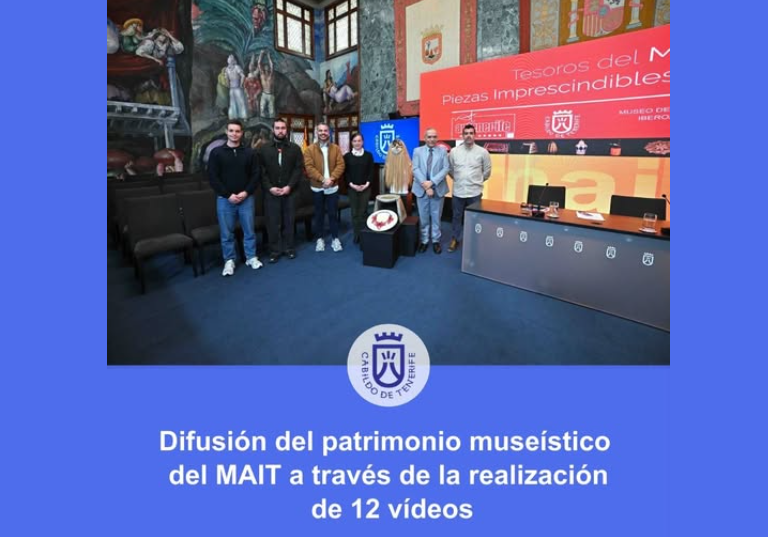
They’ve produced 12 short videos as part of the project “Indispensables del MAIT”, designed to highlight some of the unique pieces held in the museum’s collection. The videos will be shared across social media and craft centres both nationally and internationally.
The project has now reached its third edition and forms part of a wider effort to position the MAIT as a reference point for Ibero-American craftsmanship and cultural heritage.
According to Efraín Medina, Tenerife’s councillor for Employment and Education, the aim is simple. Help people understand the artistic value of the objects held in the museum and make that knowledge more accessible through digital formats.
The MAIT welcomed around 11,000 visitors last year, and the museum also plays a strong role in education. Around 7,000 students have taken part in educational visits and training programmes linked to the museum’s activities.
To bring the collection to more people across the island, the Cabildo has also organised 14 travelling exhibitions, which are scheduled to visit municipalities throughout Tenerife until 2027.
The new video series focuses on twelve distinctive pieces from the museum’s collection, including:
- A traditional Valencian fan from 1992
- A black clay urn from Oaxaca, Mexico made using a pre-Hispanic technique
- A colourful Mola textile created by the Kuna indigenous people of Panama
- A ceremonial Warime mask from Venezuela
- A carved indigenous wooden bench from Nariño
- A Talavera-style ceramic piece from Puebla, Mexico
- A walnut sculpture with 24-carat gold leaf from Chile
- Handcrafted textiles from Puerto Rico
- A delicate lace necklace from Croatia
- A garment from the “Jammu” collection combining Canarian rosette lace with bespoke tailoring
- And a Cuzco nativity scene from Peru, featuring hand-crafted figures and fabrics.
Projects like this are designed to bring a bit more visibility to the traditions and craftsmanship that often sit quietly inside museums but represent centuries of cultural history.
If you’ve never visited MAIT in La Orotava, it’s one of those places that tends to surprise people once they walk through the door.
Click here to read the original article.