
Some dates come and go.
Others stay.
14 April is one of those in Santa Cruz… tied to hope, but also to what came after.
A Day That Meant Change
Back in 1931, the proclamation of the Second Republic was met with real optimism across the Canary Islands.
For many, it felt like a chance to fix things:
- Poor living conditions
- Lack of education
- Political control by a few
There was genuine belief that things could improve.
And Then 1936
Fast forward five years… same date, very different context.
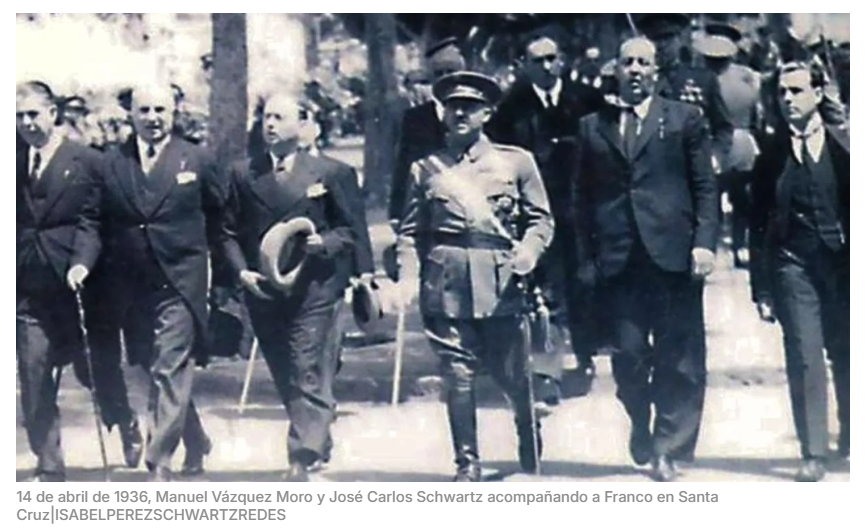
In Santa Cruz, 14 April 1936 was still being marked publicly.
There’s even that well-known image:
- Francisco Franco
- Mayor José Carlos Schwartz
- Governor Manuel Vázquez Moro
All present at the same event.
Looking back now… it feels like the calm before everything changed.
Just Months Later
By July 1936, everything had shifted.
Both Schwartz and Vázquez Moro were:
- Arrested
- Imprisoned in Paso Alto
- Caught up in the early repression of the dictatorship
Paso Alto, once a defensive site, became a prison.
What Followed
The outcomes were stark:
- Vázquez Moro was executed in October 1936
- His body placed in a mass grave
- José Carlos Schwartz disappeared
- And has never been found
For families, that’s where the story doesn’t end… it just stops.
The Human Side
Accounts from relatives paint a clearer picture than any official record.
Arrests, looting of homes, false promises of release…
And then silence.
One day taken.
Never returned.
Why the Date Still Matters
14 April isn’t just about the Republic.
In Tenerife, it carries something heavier.
It marks:
- A moment of hope
- And the abrupt end of it
Each year, it comes back around… not just as history, but as memory.
And a reminder of how quickly things can turn.